6 Features Worth Prioritizing When You Buy a First Vehicle for a New Driver
October 19 2026,
Handing over a set of keys to a newly licensed driver comes with a particular mix of pride and nerves. The road test is done, the learner days are behind them, and the question that follows is a practical one: what should their first vehicle actually have? Spec sheets and feature lists make it easy to get lost in screens, speakers and horsepower figures that have little to do with keeping an inexperienced driver out of trouble.
The more useful approach is to start with protection and predictable help, then work toward convenience. Across the brands at Carson Automotive Group, many of the features that matter most for a new driver are now standard or widely available, but they vary by model and trim, so knowing what each one does, and where its limits begin, makes for a better shortlist. These six deserve priority, roughly in this order.
1. Strong Crash Protection, Manageable Size and Stability Control
The foundation of a good first vehicle is how well it protects its occupants when something goes wrong. Safety researchers advise families to avoid vehicles that are very small, quite old, or built and marketed around power, and to look for strong crash-test results, including good headlight performance. Very small, light vehicles offer less protection in a collision, while high-powered ones tempt an inexperienced driver to use that power.
Electronic stability control belongs in this first group. It detects when the vehicle isn’t going where the steering wheel is pointed, then brakes individual wheels or reduces engine power to help bring it back in line. It’s one of the most valuable features for a driver still learning how a car behaves near its limits. It can’t overcome too much speed or worn tires, though, and good tire and brake condition still matter.
2. Automatic Emergency Braking
Automatic emergency braking watches the road ahead, warns of a likely collision, and applies the brakes automatically to avoid it or reduce its severity. For a new driver, it acts as a backstop for the moment of distraction or misjudgment that experience hasn’t yet trained out. Some systems also detect pedestrians, cyclists or large animals, while others only recognize vehicles, so it’s worth checking which version a vehicle carries.
The limits are worth explaining to the new driver directly. Rain, snow, low light, curves and higher speeds can all reduce how well the system performs. It works alongside attention, safe speed and a proper following distance, and a new driver needs all three.
3. Blind-Spot and Rear Cross-Traffic Warnings
Lane changes and reversing are two of the manoeuvres new drivers find hardest to judge, and two warning systems target them directly. Blind-spot warning watches the areas beside and behind the vehicle and alerts the driver when another vehicle is there. Rear cross-traffic warning watches for vehicles approaching from either side while reversing out of a parking spot or driveway, and some systems also flag pedestrians or cyclists.
Both are warnings, and they don’t steer or brake on their own unless the vehicle has a separate system that does. Rear cross-traffic warning can also miss fast-moving traffic, and it shouldn’t be relied on to spot a child behind the vehicle. The habits still matter most: mirror checks, a shoulder check before every lane change, and slow, careful reversing.
4. Lane Support With Clearly Understood Limits
Lane keeping assistance reads the lane markings with a camera and can gently steer or brake to correct an unintended drift toward the edge of the lane. Some systems go further with lane centring, which keeps the vehicle in the middle of its lane on the highway. For a new driver, a nudge back from a drifting moment can prevent a serious mistake.
This is also the feature most likely to be misunderstood. Lane support may only work within certain speeds, and it can struggle on tight bends or roads where the markings are faded, covered or missing. A new driver should learn what the system’s dashboard indicators look like, so they can tell when it’s active and when it has switched off.
5. Driver-Setting Tools and Low-Distraction Controls
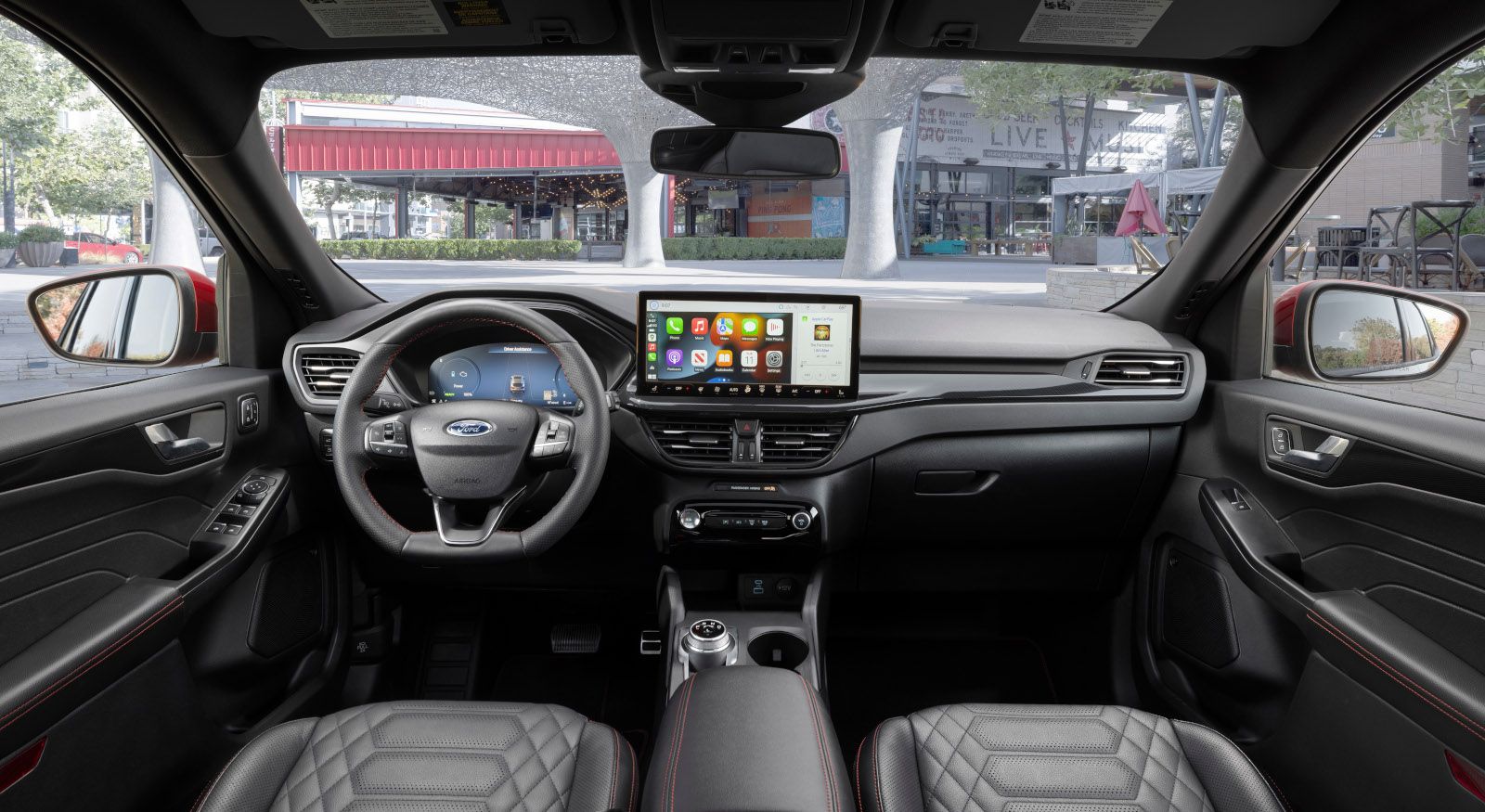
Some vehicles let a parent set rules for the new driver, and the tools vary considerably in what they actually do. Ford’s MyKey programs restrictions into a specific key. Depending on the vehicle, it can set a maximum speed that can’t be overridden by flooring the accelerator, cap the audio volume, mute the audio until seat belts are fastened, and keep certain safety systems switched on. An administrator key controls those settings.
Connected-vehicle services take a different approach. Mazda’s Guest Driver Alert and the parental controls in MITSUBISHI CONNECT send notifications to a parent’s phone when the vehicle leaves a set area, is driven outside set hours or exceeds a chosen speed, depending on model and trim. These services notify a parent without restricting the vehicle, and new drivers should know when they’re in use.
Simple controls matter just as much. Physical buttons for climate and volume, and a phone placed out of reach, keep eyes on the road. Hands-free calling still counts as a distraction, and many licence conditions restrict device use for new drivers, so connectivity features belong lower on the list than safety.
6. Right-Sized Efficiency and Insurance Suitability
The last priority is ownership cost, which shapes how manageable that first vehicle will be. A vehicle sized to everyday needs, without excess bulk or horsepower, uses less fuel, and comparing official fuel consumption ratings for the exact model and powertrain under consideration gives a fair picture. That advice works alongside the first priority: the goal is adequate protection without unnecessary size or power.
Insurance deserves a check before purchase. A vehicle’s make, model, year, value, safety equipment and typical repair costs all feed into how insurers rate it, alongside the driver’s own history. Safety features can influence a vehicle’s rating, but they don’t guarantee a discount, so getting an actual quote for the specific vehicle and driver avoids surprises.
|
Priority |
What to Look For |
Key Limit to Explain |
|
Protection |
Strong crash ratings, stability control |
Can’t overcome excess speed or poor tires |
|
Collision help |
AEB, blind-spot and cross-traffic warnings |
Weather and speed reduce effectiveness |
|
Driver tools |
Restriction keys or parent alerts |
Alerts notify; only some tools restrict |
Building the Shortlist
A good first vehicle doesn’t need every feature on the list, but it should cover the first three priorities well before anything else is considered. From there, driver-setting tools, simple controls and a sensible ownership cost round out a vehicle that’s easier to learn in and easier to live with. The most valuable step happens outside the vehicle: sitting down with the new driver, walking through each system, and making sure they know what it does and what it can’t do.
The sales teams at Carson Automotive Group’s dealerships can confirm exactly which of these features a given model and trim includes, with every location listed on the group’s website.