How Modern Towing Technology Removes the Guesswork From Hauling a Trailer
July 28 2026,
There’s a particular kind of sweat that comes from backing a boat trailer down a launch ramp on a busy Saturday, with a line of trucks waiting behind and a dock full of people watching. Turn the wheel the wrong way and the trailer jackknifes instead of straightening out. It’s one of the most common moments where towing confidence falls apart, and for decades the only real tool available was practice, a lot of it, usually earned the hard way.
That’s changed faster than most drivers realize. The vehicles moving through Carson Automotive Group’s lineup now use cameras, sensors, and onboard software to handle the two moments where inexperienced towers tend to get into trouble: hitching up and backing up. The guesswork hasn’t disappeared because towing got easier in some abstract sense. It’s disappeared because specific tools now exist for specific problems.
Where Guesswork Used to Live
Ask anyone who tows occasionally where things go wrong, and the answer usually lands in one of two places. The first is lining up the hitch ball with the trailer coupler, a task that’s simple in theory and surprisingly fiddly in practice when the ball disappears from view the moment the truck gets close. The second is reversing, where the trailer moves opposite to the direction most drivers instinctively turn the wheel, and small errors compound quickly in a tight space.
Both of these are spatial problems, not knowledge problems. A driver can understand exactly how a trailer is supposed to behave in reverse and still struggle to execute it smoothly, because the feedback loop between hands, eyes, and a trailer twenty feet behind the vehicle is genuinely difficult to build without repetition.
Cameras and Sensors Replace the Guessing
Hitch assist technology addresses the first problem directly. A rear camera provides a zoomed, top-down view of the hitch ball, often with a coloured guideline overlaid on the screen showing exactly where the ball is heading as the vehicle reverses. What used to require a passenger leaning out a window and shouting directions now happens with a glance at the touchscreen.
The second problem, backing up, gets solved with automated trailer backup systems that let the driver steer the trailer directly instead of steering the vehicle in the opposite direction. Turn a dedicated knob toward the direction the trailer should go, and the system calculates and applies the correct steering angle on its own. The driver still controls the accelerator and brake, but the counterintuitive part, the part that takes most people years to get comfortable with, gets handled automatically.
Surround-view cameras add another layer on top of both of these systems, stitching together multiple camera angles into a single overhead view that eliminates the blind spots a large trailer normally creates. Some systems go a step further with a transparent-trailer effect, essentially showing what’s directly behind the trailer as though it weren’t there at all, which matters most in tight campgrounds or crowded parking lots.
Weight Isn’t Something to Eyeball Anymore
Guessing at trailer weight used to be common practice, and it’s also where towing crosses from inconvenient into genuinely risky. British Columbia’s rules make it illegal to tow a trailer that exceeds its rated weight limits, and officers can ticket an overweight combination. Trailers with a gross weight over 1,400 kilograms need brakes on every axle plus a breakaway device that automatically engages the trailer brakes if it separates from the tow vehicle, and any trailer connected with a ball hitch needs safety chains or cables as a backup connection.
Weight-monitoring technology takes the guessing out of this entirely. Some hitches now include built-in scales that read tongue weight directly and flag it against the vehicle’s rated capacity before the trip even starts, rather than leaving a driver to estimate based on how the rear end of the vehicle looks once it’s loaded.
A short checklist before pulling away covers most of what these systems are designed to catch automatically:
- Trailer lights connected and functioning, including brake lights and turn signals
- Safety chains crossed underneath the hitch, with enough slack to turn without dragging
- Tongue weight within the vehicle’s rated capacity
- Extra following and stopping distance planned into the drive, since a loaded trailer changes both
BC’s geography puts a lot of pressure on that checklist. A ferry lineup at Swartz Bay or Tsawwassen means backing a trailer into a tight sailing queue with an audience, a boat ramp adds a slippery, sloped surface to the same reversing challenge, and a mountain grade on the way to the Interior tests trailer brakes and sway control far more than a flat suburban street ever would. None of these situations are unusual for a BC tow vehicle. They’re a fairly normal weekend.
Smoothing Out the Actual Drive
Once the vehicle is moving, a dedicated Tow/Haul drive mode changes how the transmission shifts and how much the engine brakes on descents, so the driver isn’t manually managing gear selection on a long grade with a loaded trailer behind them. Selecting it typically holds lower gears longer under acceleration, delays upshifts to avoid unnecessary gear hunting on hills, and uses engine braking more aggressively on the way down, which takes real pressure off the service brakes on something like the Malahat with a loaded trailer in tow. Trailer stability control works alongside this, watching for the early signs of a trailer starting to sway and responding with a combination of automatic braking and reduced engine power to settle it back down before the driver even fully registers what’s happening.
How This Shows Up in Vehicles Already Being Cross-Shopped
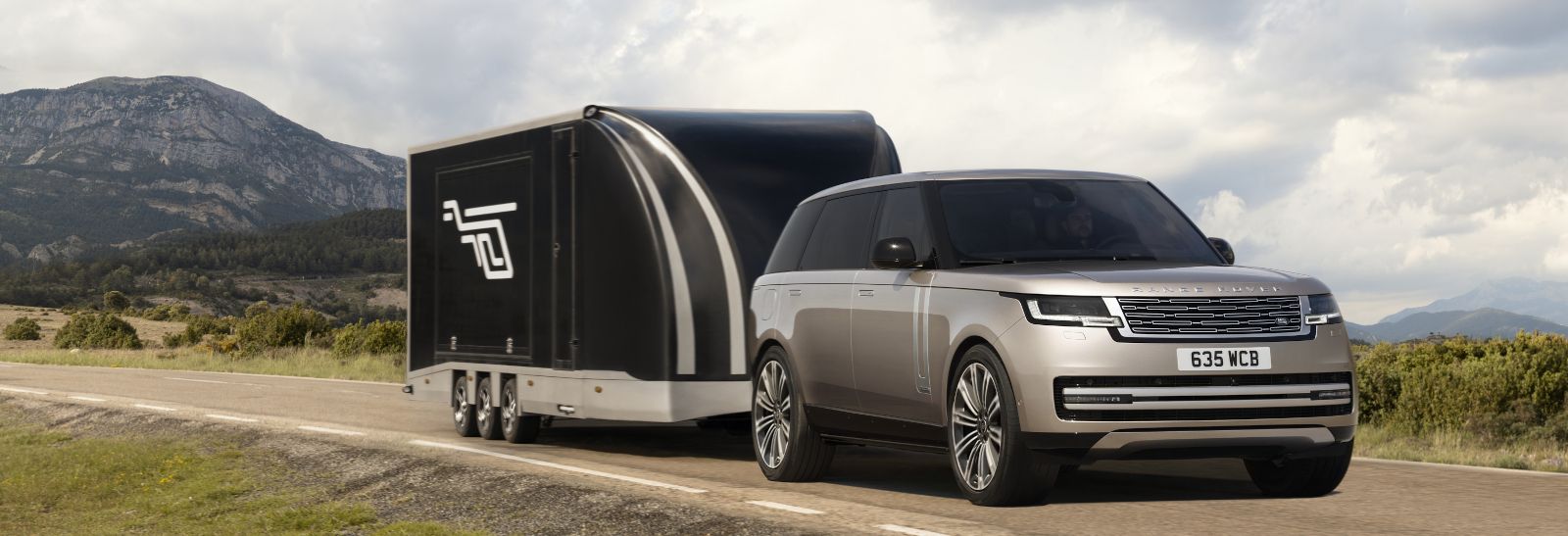
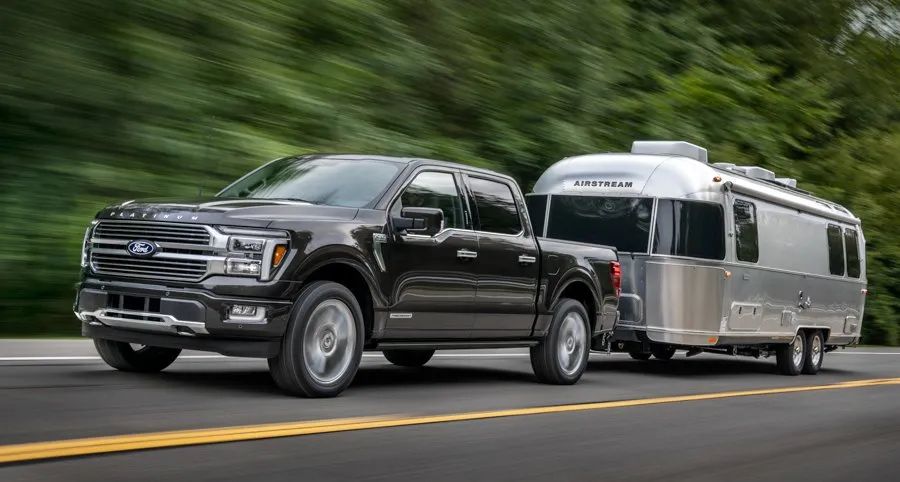
These systems aren’t limited to one badge or one price point. Ford’s Pro Trailer Backup Assist puts the steering-by-knob system into the F-150 and the Maverick, letting a compact pickup buyer access the same reversing technology as someone shopping a full-size truck. Lincoln’s Navigator carries a factory, dash-integrated trailer brake controller alongside its own trailer sway control, built for owners regularly pulling larger loads. Land Rover’s Advanced Tow Assist uses the Terrain Response rotary controller to manage reverse steering on the Defender and Discovery, pairing it with a trailer capacity up to 7,716 lbs (3,500 kg) on the Defender. On the Mitsubishi side, the Outlander’s standard Trailer Stability Assist works with the SUV’s Active Stability Control to keep a smaller trailer tracking straight, useful for the boat-and-personal-watercraft towing that fits its 2,000 lbs (907 kg) rating.
|
Technology |
What It Solves |
Example |
|
Camera-guided hitch assist |
Aligning the ball with the coupler |
Zoomed rear camera with guideline overlay |
|
Steering-by-knob backup assist |
Reversing a trailer without fighting the wheel |
Ford Pro Trailer Backup Assist |
|
Trailer stability control |
Automatic correction when a trailer starts to sway |
Mitsubishi Trailer Stability Assist |
|
Integrated trailer brake controller |
Coordinated braking between vehicle and trailer |
Lincoln’s dash-mounted controller |
The Confidence Behind the Wheel
None of this technology changes the physics of towing a loaded trailer down a highway or into a tight campsite. What it changes is how much of that task depends on instinct built up over years versus a system quietly doing the calculating in the background. The driver backing down that launch ramp with a line of trucks waiting no longer needs to have done it a hundred times before to do it smoothly. The guesswork that used to define the learning curve has mostly been engineered out of it.