The Growing Role of 360-Degree Camera Systems in Everyday Parking
July 30 2026,
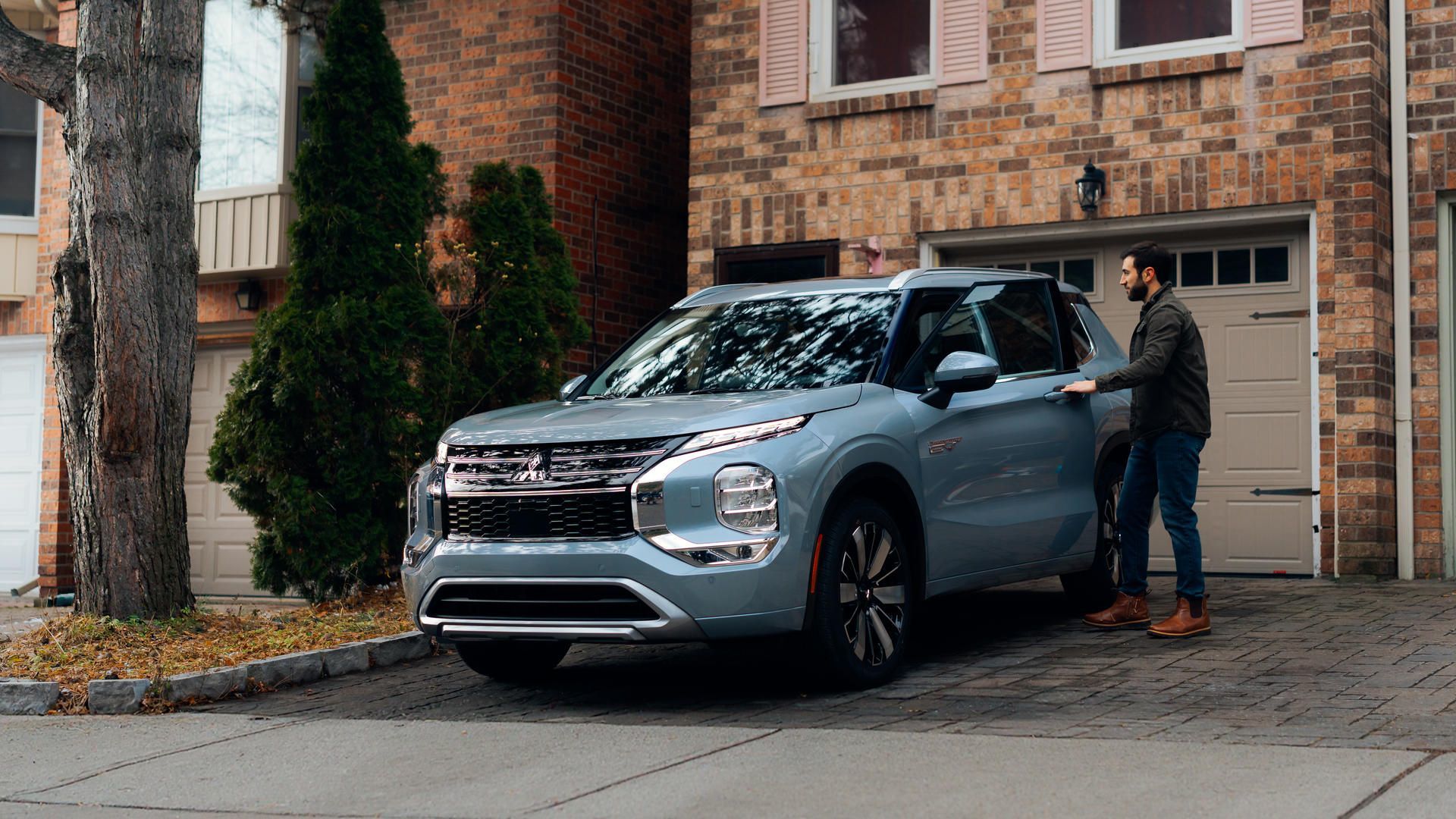
There’s a particular kind of guesswork that happens in a downtown Victoria parkade, inching a vehicle into a stall with a concrete pillar on one side and someone’s parked SUV on the other, judging the gap by feel because the mirrors can’t quite show what’s happening at bumper height. It’s not a dramatic moment. It’s just a small, repeated act of faith that the vehicle is where the driver thinks it is.
That’s the gap a 360-degree camera system is built to close. It started out as a flagship feature, the kind of thing that showed up first on premium trims and got treated as a bit of a novelty, a screen that made parking look like a video game. It’s since spread through much of the lineup at Carson Automotive Group and a lot of the daily value has nothing to do with novelty. It’s about knowing exactly where the corners of a vehicle are in situations where mirrors, and even a single rear camera, simply run out of coverage.
More Than a Single Camera
A 360-degree system pulls footage from multiple wide-angle cameras, typically one on the front grille, one on the rear bumper, and one on each side mirror, and stitches all four feeds together into a single overhead view of the vehicle and the space immediately around it. The processing happens quickly enough to feel live, and the resulting image looks like it was shot from a drone hovering directly above the roof.
That’s a meaningfully different tool than a standard backup camera. A single rear camera shows what’s directly behind the vehicle, which solves the most common blind spot but leaves plenty of others untouched. A stitched, overhead view fills in the space a mirror or a lone camera physically can’t reach: a low curb sitting below the sightline of a rear camera, a parkade pillar hugging the side of the vehicle, or a fender edging closer to a wall than it looks from the driver’s seat.
Where a Single Camera Still Falls Short
Low curbs are a good example of why this matters. They sit close to the ground, often outside the angle a rear camera is aimed at, and they’re exactly the kind of obstacle that puts a scuff on a wheel or a scrape along a rocker panel. Pillars in a tight parkade cause a different problem, since they sit beside the vehicle rather than behind it, in the zone mirrors cover poorly and a rear camera doesn’t cover at all. A composite overhead view puts both of these squarely on screen instead of leaving them to instinct.
The same logic applies to parking close enough to a wall or another vehicle that opening a door becomes its own small negotiation. Being able to see the exact gap on a screen, rather than estimating it through a side mirror, is a small thing that adds up over years of daily parking.
From Luxury Add-On to Everyday Tool
What’s changed is where this technology shows up. It used to be reserved for flagship trims on premium vehicles. It’s increasingly available across mainstream SUVs, trucks, and even compact cars, which shifts the conversation from “nice to have” toward “genuinely useful for whoever drives the vehicle most.” New drivers benefit from a more forgiving margin for error while spatial judgment is still developing. SUV and truck owners benefit because a taller hood and wider body naturally create larger blind zones than a compact car has. And dense, condo-heavy, downtown parking, common across Vancouver Island and the Lower Mainland alike, is precisely the environment where tight stalls and unexpected pillars turn up most often.
A few everyday BC scenarios show why this keeps coming up in daily driving rather than staying a rare, once-a-year situation:
- Underground strata parkades with narrow stalls, low concrete pillars, and tight turning radii between rows
- Downtown Victoria and Vancouver street parking, where a few centimetres separate a bumper from the vehicle in front and behind
- Ferry terminal lots that fill up fast and often leave only awkward, angled spaces near the end of a sailing queue
- Rainy-season visibility, where a fogged or streaked side mirror makes a stitched camera view more reliable than a glance over the shoulder
It’s worth noting that these camera systems typically run on different sensors than radar-based safety features like automatic emergency braking, even though both fall under the broad umbrella of driver assistance technology. Some automakers are beginning to fuse camera and radar data into a single, more complete picture, but for now a 360-degree view and something like forward collision warning are usually doing separate jobs with separate hardware behind them. Rearview cameras themselves became standard equipment on new vehicles back in 2018, specifically to address backover crashes, and that same underlying logic, that a camera catches what a mirror physically cannot, is what a 360-degree system extends around the entire vehicle rather than just the rear.
How This Shows Up in Vehicles Already Being Cross-Shopped

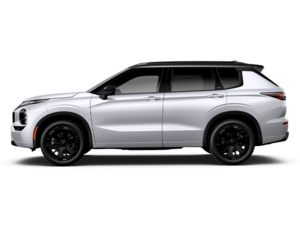
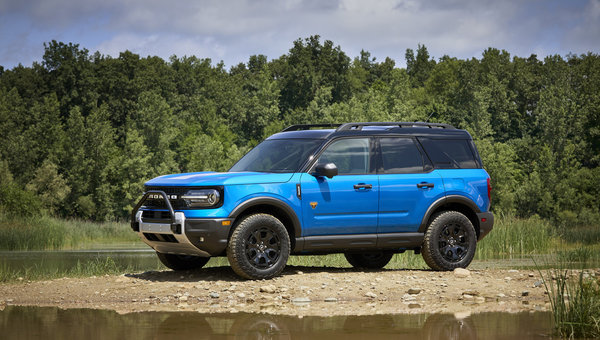
The feature goes by a different name depending on the badge, but the underlying idea stays consistent. Ford’s 360-Degree Camera stitches together the same four-camera layout to help with tight parking and trailer alignment. Mazda’s 360° View Monitor, offered with a See-Through View function on some models, can visually clear away sections of the hood and fenders on screen to reveal what’s directly underneath the front corners. Land Rover’s 3D Surround Camera brings the same bird’s-eye perspective to the Defender and Discovery, useful as much for judging trail obstacles as parkade pillars. Mitsubishi’s Multi-View Camera System on the Outlander applies the same idea to a family SUV, most noticeably useful when backing a trailer down a boat ramp or squeezing into a crowded lot.
|
Brand |
System Name |
Where It Helps Most |
|
Ford |
360-Degree Camera |
Tight parking, trailer alignment |
|
Mazda |
360° View Monitor |
Low obstacles hidden by hood or fenders |
|
Land Rover |
3D Surround Camera |
Trail obstacles and tight parkades alike |
|
Mitsubishi |
Multi-View Camera System |
Trailer backing, crowded lots |
Seeing What the Mirrors Never Could
None of this replaces a careful driver checking mirrors and glancing over a shoulder before committing to a tight space, and no camera system, however many angles it stitches together, changes the laws of physics for a vehicle easing into a space with inches to spare on either side. What it adds is the part mirrors were never built to show: the low curb below the sightline, the pillar tucked against the door, the few centimetres of clearance that used to be a guess. A feature that once felt like a flourish on a luxury trim has quietly become one of the more useful tools in a parkade, and its value shows up in the small dents and scrapes that simply don’t happen anymore.