Adaptive Cruise to Hands-Free: Understanding the Levels of Driver Assistance
August 24 2026,
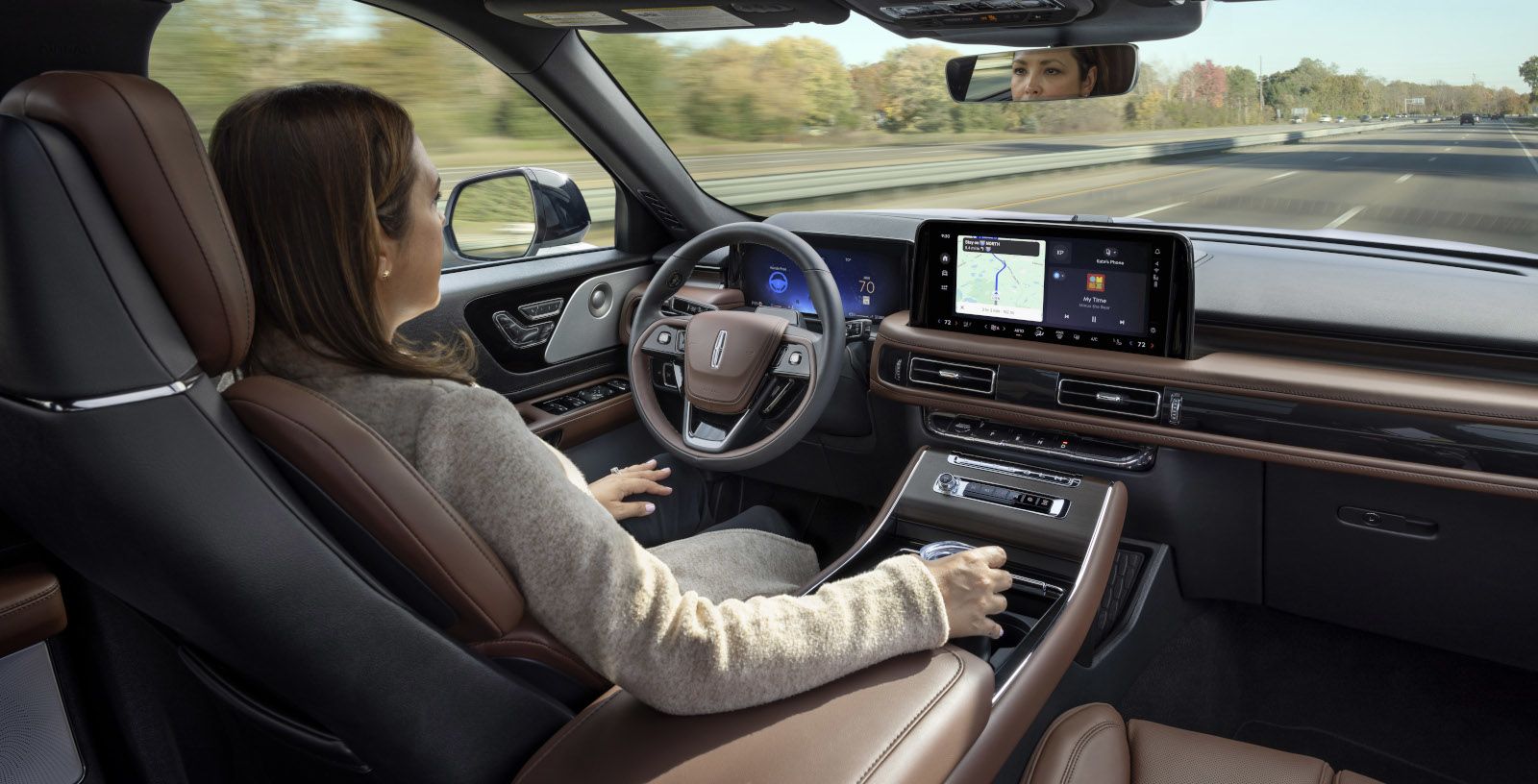
Somewhere on Highway 1 north of the Malahat, a driver lifts both hands off the wheel and the truck keeps its lane, holds its gap, and eases through a long bend on its own. To the car alongside it looks like the future. To the engineers who built it, and to the standard that classifies it, it’s the same category of system as the adaptive cruise control in a ten-year-old sedan, with better execution. Both are Level 2. Neither is driving the vehicle.
That gap between how a feature looks and what it actually is has become the most common misunderstanding in the driver-assistance conversation. Across the lineup at Carson Automotive Group, every brand offers some version of adaptive cruise, most pair it with lane centring, and one offers it hands-free on mapped highways. Placing each of those on the ladder the industry actually uses, and being clear about where the ladder stops for vehicles sold in Canada today, is the most useful thing a shopper can take into a comparison.
The Ladder the Industry Uses
Driver assistance and automation are classified on a six-level scale defined by SAE International, from Level 0 to Level 5. The levels aren’t a measure of how advanced a system feels. They describe who is responsible for the driving, and that’s the detail that matters.
|
Level |
Who Is Driving |
What the System Does |
|
0 |
The driver, entirely |
Warnings and brief interventions only, such as automatic emergency braking |
|
1 |
The driver, with help |
Controls steering or speed, never both; basic adaptive cruise sits here |
|
2 |
The driver, supervising |
Controls steering and speed together; the driver must stay attentive and ready |
|
3 |
The system, in defined conditions |
Handles the full task in limited situations; the driver must take over when asked |
|
4 |
The system, in a defined area |
No expectation of driver takeover within its operating zone |
|
5 |
The system, everywhere |
Full automation in all conditions |
The single most important line on that ladder sits between Level 2 and Level 3. Below it, the person in the seat is driving, whatever their hands are doing. Above it, the system is. Every vehicle in the group’s lineup, and every personal vehicle sold in Canada by any of its brands, sits below that line.
From Adaptive Cruise to Lane Centring
Adaptive cruise control on its own is a Level 1 feature. Radar and a camera watch the vehicle ahead, and the system holds a set speed or a set following gap, slowing and accelerating as traffic does. Most current versions add stop-and-go capability, bringing the vehicle to a complete halt behind stopped traffic and resuming when it moves. The driver is steering the entire time. It’s worth noting that Level 1 has been common for well over a decade; what’s changed recently is how smoothly the systems brake and resume, not what they’re allowed to do.
The moment lane centring is layered on top, the system is controlling speed and steering at once, and it becomes Level 2. Lane centring uses the forward camera to read lane markings and applies gentle steering to keep the vehicle in the middle of its lane rather than merely nudging it back when it drifts. Most systems require hands on the wheel and will warn, then disengage, if they sense the driver has let go. They also have edges: faded or missing lane markings, heavy rain, and low sun can all cause the steering side of the system to pause while the speed control keeps working, which is why the cluster icon changes colour more often than most drivers expect. The workload drops noticeably on a long highway drive. The responsibility doesn’t move at all.
Hands-Free Is Still Level 2

Here’s the part that surprises people. When a system allows the driver to take their hands off the wheel on approved highways, it hasn’t climbed the ladder. It’s still Level 2, because the driver is still required to watch the road and be ready to take control immediately. What changes is the method of confirming attention. Instead of sensing hands on the wheel, a driver-facing infrared camera tracks eyes and head position, and if attention leaves the road for more than a glance, the system warns and eventually hands control back.
That’s why the same manufacturer materials that describe a system as hands-free also insist, in the same breath, that it isn’t self-driving. The distinction has consequences beyond terminology. IIHS research has found that drivers who regularly use partial-automation systems can develop a false sense of security about what the technology handles, and hasn’t found that these systems reduce crashes beyond what basic crash-avoidance features already deliver. A driver-facing camera exists to counter exactly that drift in attention. It’s the system reminding the driver that the driving is still theirs.
Where the Group’s Brands Sit
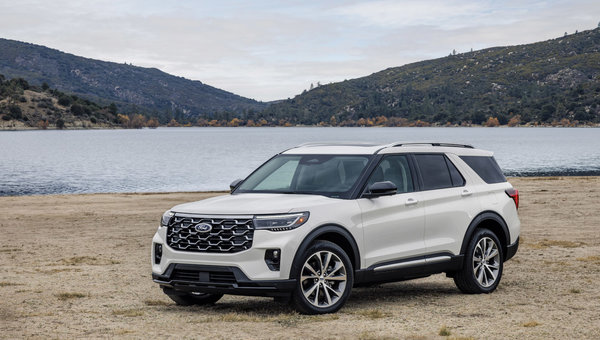
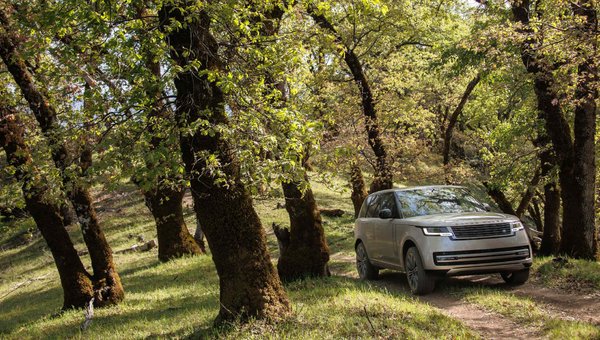
Ford’s BlueCruise is the group’s only hands-free system, and it’s a Level 2 system by definition: hands-free driving is available only inside pre-mapped stretches of controlled-access highway, a driver-facing camera confirms attention throughout, and the system has been refined through over-the-air updates. On the same platform, adaptive cruise with lane centring is available across the broader Ford lineup as a hands-on Level 2 combination. Mazda splits the two levels cleanly by name: Mazda Radar Cruise Control with Stop & Go is Level 1 on its own, and Cruising & Traffic Support adds steering assist to make it Level 2, operating from a standstill up to about 145 km/h on models like the CX-90 while Mazda’s own manual states plainly that it is not an automated driving system. Mitsubishi’s MI-PILOT Assist on the Outlander pairs stop-and-go adaptive cruise with lane centring, a hands-on Level 2 system that also reads speed-limit signs. Land Rover pairs adaptive cruise control with a steering-assist function across its lineup, hands-on and eyes-on, which places it at Level 2 as well.
|
Brand |
System |
Level |
|
Ford |
BlueCruise |
Level 2, hands-free on mapped highways, camera-monitored |
|
Mazda |
Radar Cruise Control / Cruising & Traffic Support |
Level 1 alone / Level 2 with steering assist, hands-on |
|
Mitsubishi |
MI-PILOT Assist |
Level 2, hands-on |
|
Land Rover |
Adaptive cruise with steering assist |
Level 2, hands-on |
The Right Question to Ask on a Test Drive
Because every system in the lineup sits at Level 1 or Level 2, the comparison between them isn’t about which is “more autonomous.” None are. The useful questions are narrower: does the system handle stop-and-go traffic, does it centre the lane or only correct drift, how does it confirm the driver is paying attention, and where, specifically, does it work. A hands-free system that only operates on mapped highways and a hands-on system that works on any road with lane lines are solving different parts of a commute, and a driver who does most of their kilometres on the Pat Bay Highway will weigh that differently from one who spends them on the Island Highway to Nanaimo.
Same Ladder, Same Rung
The technology on that stretch of Highway 1 is genuinely capable, and it will keep getting better. It also sits on the same rung as the adaptive cruise in the lane beside it, one level below the point where a vehicle takes over the driving. Knowing that turns a set of confusing marketing names into a simple comparison, and it keeps the most important fact about all of them in view: the person behind the wheel is still the one driving.