Mild Hybrid, Plug-In or EV? Choosing the Right Powertrain
September 23 2026,

The word “electrified” now covers a wide range of vehicles. Some add a small electric boost to a gasoline engine and never need a plug. Others drive on battery power for a full commute before the engine turns on. At the far end, a fully electric vehicle runs on its battery alone.
Each step up the scale changes how you fuel, how you charge and how you plan longer drives. The right choice depends on where you park at night, how far you drive on a typical day and what you need the vehicle to do. This guide walks through the four main types, with examples from across Mazda, Ford, Lincoln and Mitsubishi.
At a Glance: The Four Electrified Powertrains
|
Powertrain |
Plugs In? |
Drives on Electricity Alone? |
Examples |
|
Mild hybrid (MHEV) |
No |
No |
Mazda CX-70 and CX-90, Mitsubishi Outlander |
|
Full hybrid (HEV) |
No |
Yes, for short stretches |
Lincoln Nautilus Hybrid |
|
Plug-in hybrid (PHEV) |
Yes |
Yes, for a set range |
Mazda CX-70 PHEV and CX-90 PHEV, Mitsubishi Outlander PHEV |
|
Battery electric (BEV) |
Yes |
Always |
Ford Mustang Mach-E |
Mild Hybrid: A Small Electric Assist

A mild hybrid adds a compact electric motor and a 48-volt system to a gasoline engine. The motor supports the engine and recharges while you drive, so there is nothing to plug in and nothing about your routine changes.
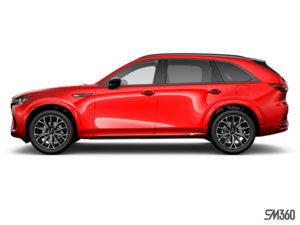
The Mazda CX-70 and CX-90 use this approach with Mazda’s M Hybrid Boost system. It pairs a 3.3 L turbocharged inline 6-cylinder engine with a 48-volt mild-hybrid system. In the CX-90, the standard version produces 280 hp and 332 lb-ft of torque, while the High Output version delivers 340 hp and 369 lb-ft on premium fuel.
The 2026 Mitsubishi Outlander also uses a 48-volt mild-hybrid system, paired with a 1.5 L turbocharged 4-cylinder engine rated at 174 hp and 206 lb-ft of torque. Mitsubishi rates it at 8.7 L/100 km combined.
Mild hybrids suit drivers who want some electrified efficiency without any change to how they fuel up. They also keep full towing strength. The mild-hybrid CX-70 and CX-90 tow up to 5,000 lbs (2,268 kg) on most trims, compared with 3,500 lbs (1,588 kg) for their plug-in hybrid versions.
Full Hybrid: Short Electric Stretches, No Plug
A full hybrid carries a larger battery and a stronger electric motor. Natural Resources Canada (NRCan) explains that hybrids recharge while driving and can operate in electric-only mode. They are particularly efficient in city driving, where frequent slowing and stopping lets the system recover energy.
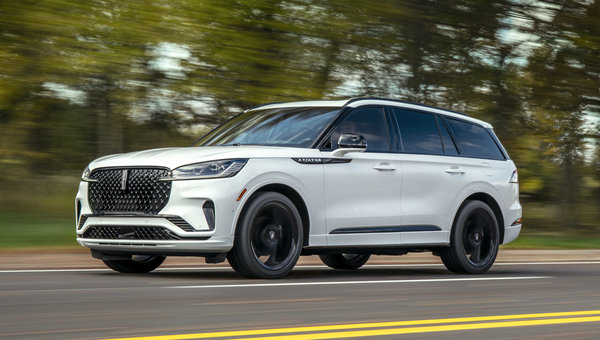
The Lincoln Nautilus Hybrid pairs a turbocharged 2.0 L 4-cylinder engine with an electric motor. Like every full hybrid, it never needs to be plugged in. You fill up with gasoline and let the system decide when to use electric power.
Plug-In Hybrid: Electric Commutes, Gas for Road Trips
A plug-in hybrid adds a battery large enough to drive a real distance on electricity, and you recharge it by plugging in. Once the battery runs low, the vehicle switches to hybrid operation, so longer trips never depend on a charger.
Stated electric ranges vary by model:
- Mitsubishi Outlander PHEV: 72 km of electric range, with seating for seven and a total system output of 297 hp
- Mazda CX-70 PHEV: 51 km on the GS-SC and GS-L SC trims, or 43 km on the GT and Signature
- Mazda CX-90 PHEV: 43 km of electric range, with a third row
Mazda’s plug-in hybrids produce 323 hp and 369 lb-ft of torque on 93-octane fuel. A PHEV fits drivers who can charge at home and whose regular weekday driving sits within the electric range. NRCan notes that ratings cannot predict every trip, since speed, temperature, weather and accessories all affect results.
Battery Electric: All Electric, All the Time
A battery electric vehicle runs entirely on its battery, with no gasoline engine. The Ford Mustang Mach-E is Ford’s electric SUV, offered in Select, Premium, GT and Rally trims.
Owning a BEV means planning around charging. Most of your charging happens at home, and longer drives call for public fast-charging stops. For drivers who can charge overnight and want to leave gasoline behind entirely, a BEV keeps the routine simple.
Charging at Home and on the Road
NRCan outlines three charging levels:
- Level 1: a standard 120 V household outlet, the slowest option
- Level 2: 208 V or 240 V equipment, the most practical choice for overnight home charging
- DC fast charging: generally used at public stations and along highway corridors
NRCan also cautions that not every plug-in hybrid accepts DC fast charging, so check the vehicle’s specifications. The Mitsubishi Outlander PHEV is one that does, reaching about 80% in roughly 29 minutes.
Before installing a Level 2 charger at home, check your home’s electrical capacity and any permit requirements. NRCan notes that most jurisdictions require a licensed electrician for the installation. NRCan’s online station locator also helps you find public chargers across Canada.
The Federal Incentive

Transport Canada’s Electric Vehicle Affordability Program offers up to $5,000 for eligible battery electric vehicles and up to $2,500 for eligible plug-in hybrids in 2026. Mild and full hybrids do not qualify. Eligibility depends on the vehicle and the transaction, including a transaction value cap for vehicles not made in Canada and minimum lease terms, so a vehicle’s presence on the eligible list does not guarantee that a specific purchase qualifies. Ask our team which trims and transactions qualify.
Which Powertrain Fits Your Driving?
Start with where you park at night and how you drive:
- No home charging, mostly highway driving: a mild hybrid like the CX-70, CX-90 or Outlander keeps things simple
- No home charging, lots of city driving: a full hybrid like the Nautilus Hybrid makes the most of stop-and-go traffic
- Home charging and a predictable commute: a plug-in hybrid like the Outlander PHEV, CX-70 PHEV or CX-90 PHEV covers weekdays on electricity
- Home charging and no need for gasoline: a battery electric vehicle like the Mustang Mach-E
- Regular towing: the mild-hybrid CX-70 and CX-90 offer the highest towing capacity of the Mazda models in this guide
Compare Electrified Powertrains Across Carson Automotive Group
Choosing a powertrain is easier when you can try several side by side. With Mazda, Ford, Lincoln and Mitsubishi dealerships in Victoria, Carson Automotive Group lets you drive a mild hybrid, a full hybrid, a plug-in hybrid and a fully electric vehicle before you decide. Visit the dealerships on your list and book a test drive of each type that fits your routine.