Torque Vectoring Explained: The Invisible Tech Keeping You Planted in Spring Showers
March 29 2026,
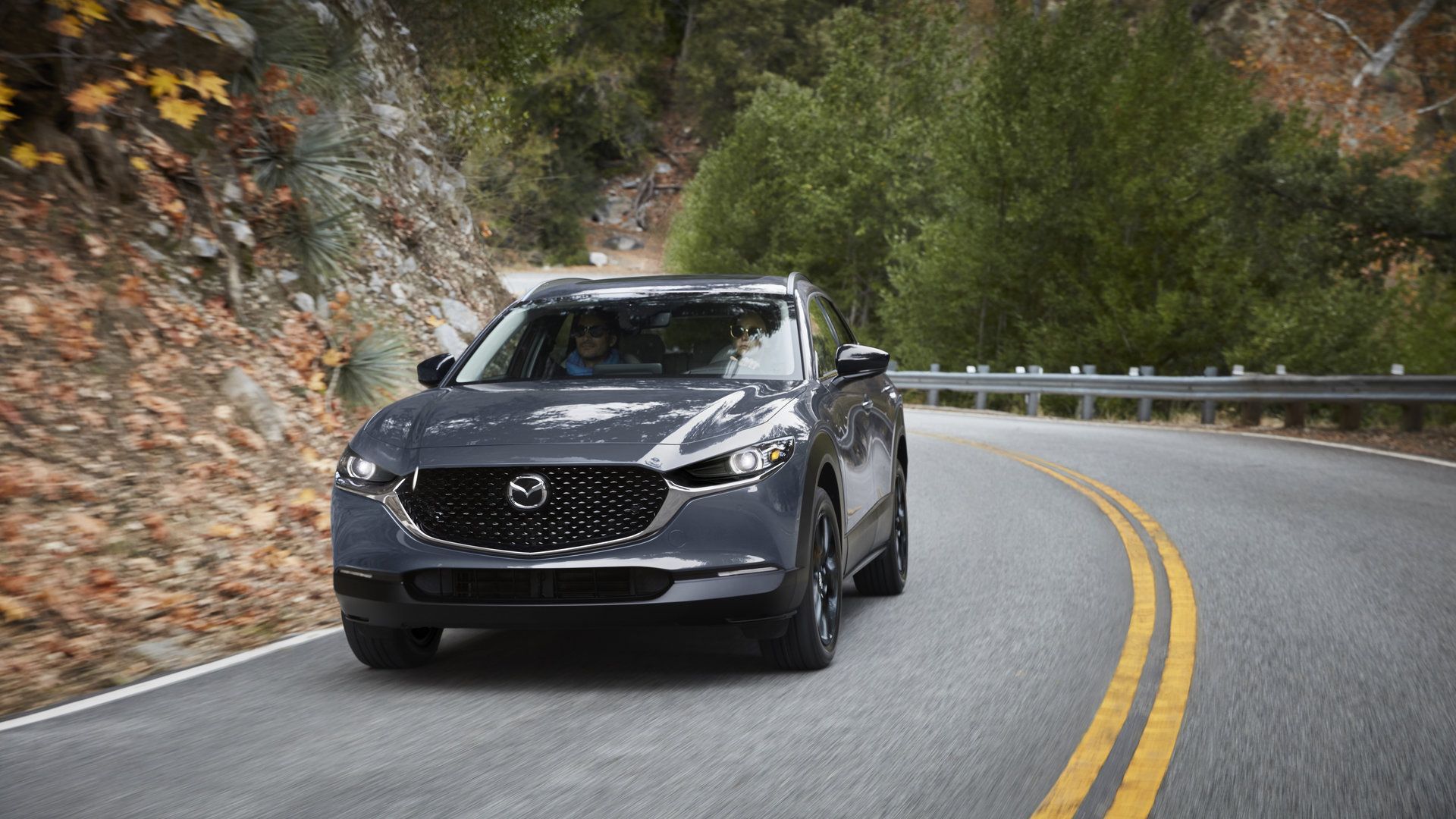
Most drivers in British Columbia believe all-wheel drive means maximum traction in wet conditions. That assumption holds until the first rain-soaked corner on Highway 99, where the difference between a composed exit and a heart-stopping moment becomes clear. AWD tells you how many wheels receive power; torque vectoring tells you how much power each individual wheel receives, down to the millisecond. On slick March pavement, that distinction is everything.
Spring in BC brings unique traction challenges. Roads combine standing water, residual winter grime, and fresh rubber wear, creating some of the year's slickest conditions precisely when drivers have mentally moved on from winter driving mode. Understanding how torque vectoring works gives you the vocabulary to ask the right questions when comparing AWD vehicles.
The Physics Problem: Why Torque Vectoring Exists
When a vehicle corners, outside wheels travel a longer arc than inside wheels. In a conventional open differential, this geometry mismatch sends torque to whichever wheel has the least resistance - typically the one with the least grip. In wet conditions, this is exactly backward from what you need.
On rain-soaked pavement, the classic failure mode is understeer (front pushes wide) or oversteer (rear steps out), both caused by the wrong wheel receiving too much torque at the wrong moment. Conventional AWD can mitigate this but cannot precisely orchestrate individual wheel torque delivery fast enough to prevent it proactively.
Torque vectoring solves this by actively redirecting torque toward the wheel with the most grip, applying a calculated torque differential between left and right wheels to generate a corrective yaw moment, steering the vehicle through physics rather than just the steering wheel.
Mechanical Torque Vectoring: The Traditional Approach
Mechanical torque vectoring uses electronically controlled clutch packs within a specially designed differential to redirect torque between left and right wheels on the same axle. The system monitors steering angle, wheel speed, lateral acceleration, and yaw rate, then applies hydraulic pressure to partially lock the appropriate clutch pack, biasing torque to the outside wheel in a corner.
This technology has been in performance vehicles for over a decade and is now migrating into performance-oriented SUVs and crossovers. The limitation is response speed dictated by hydraulic actuation time - fast but not instantaneous.
Electric Torque Vectoring: The 2026 Leap Forward
In dual-motor or multi-motor EV and hybrid architectures, each axle (or in some cases each wheel) has its own electric motor. The control system can independently vary the output torque of each motor in single-digit milliseconds, orders of magnitude faster than any mechanical differential.
This means the system doesn't just react to slip; it applies micro-corrections continuously at each wheel, keeping the vehicle balanced before any perceptible loss of grip occurs. On rain-soaked roads, the vehicle feels eerily calm and planted through corners and lane changes where a conventional vehicle would feel nervous. The corrections are invisible because they happen too fast to feel as individual events.
The Genesis GV60 Magma demonstrates this capability with 641 hp distributed across dual motors, 0 - 60 mph in 3.4 seconds while maintaining precise torque control at each axle. This is why EVs and PHEVs often surprise drivers with their wet-weather composure; the powertrain architecture enables torque control that internal combustion alone cannot match.
Torque Vectoring by Braking: The Mainstream Solution

This software-based approach briefly applies the brake to the inside wheel during cornering, channelling more torque to the outside wheel. Less mechanically complex and available on more mainstream models, it's slightly less smooth than a dedicated torque-vectoring differential because braking introduces a minor retardation effect.
This is the most widely deployed form of torque vectoring across mainstream lineups. Many vehicles have it without the marketing team calling it torque vectoring, integrated into Electronic Stability Control and Active Yaw Control systems.
How It Prevents Hydroplaning on Spring Roads
Hydroplaning occurs when a film of water builds between the tire contact patch and road surface faster than the tire can displace it, causing the tire to float and lose traction entirely. It happens most readily when a tire is asked to both steer and transmit high drive torque simultaneously - the exact condition of a wet-road corner.
Torque vectoring addresses this by reducing torque demand on a wheel approaching its traction limit (keeping it below the threshold where hydroplaning initiates) while simultaneously increasing torque on the wheel with better grip to maintain vehicle momentum and direction.
The system works in concert with ABS and stability control. Where ABS prevents wheel lock-up under braking and ESC reduces engine torque to prevent spin, torque vectoring adds a proactive layer. It doesn't just subtract inputs to prevent failure; it actively redistributes energy to maintain performance.
What to Ask When Comparing AWD Vehicles
Not every AWD badge means the same thing. When comparing vehicles, ask specifically whether the system uses active torque vectoring or torque vectoring by braking, and whether it's available on the trim you're considering. On a wet March morning on the Sea-to-Sky Highway, the answer matters.
Electric vehicles with dual-motor architectures offer the fastest, most precise torque vectoring available today. Mechanical systems in performance-oriented models provide excellent response for drivers who prioritize handling dynamics. Torque vectoring by braking, standard on many mainstream AWD vehicles, delivers meaningful wet-weather composure without the cost premium of dedicated hardware.
Torque vectoring isn't a feature you can evaluate on a spec sheet. It's something you feel in the first wet corner, the first lane change through spray on the highway, the first moment a conventional vehicle would have felt nervous and this one stays calm.