Towing Capacity Explained: How to Match Your Trailer to Your Tow Vehicle
May 29 2026,
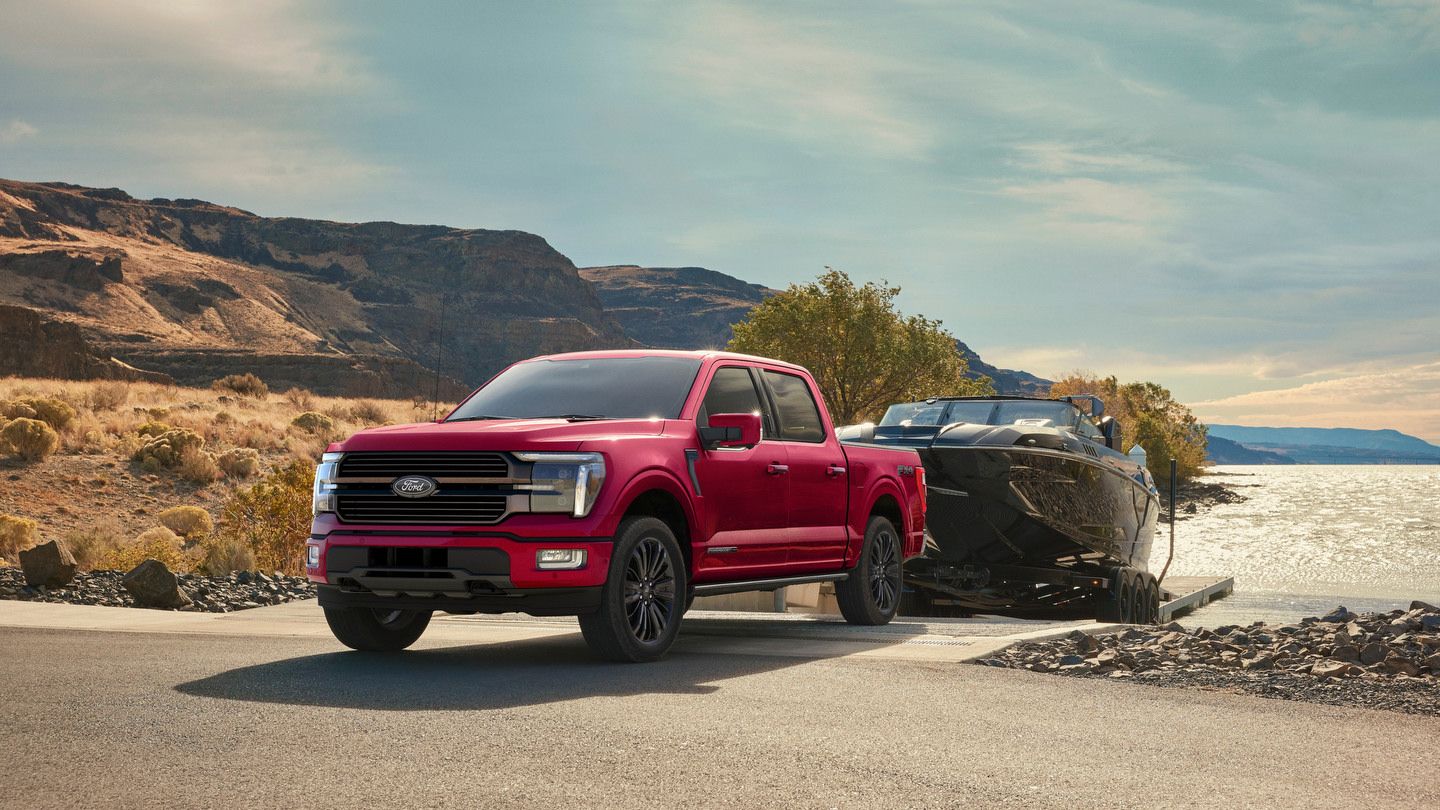
Towing capacity is one of those specs that looks straightforward on a brochure and turns complicated the moment you start asking follow-up questions. What exactly does “up to” mean? Does the number apply to the vehicle on the lot, or only a specific configuration? What happens when you add passengers, gear, and a full water tank to the equation? These are the questions that matter most, and they rarely get answered in a spec comparison.
Carson Automotive Group in Victoria carries the Ford F-150, Lincoln Aviator, Land Rover Defender, and Land Rover Discovery — four vehicles that approach towing from very different angles and serve as useful examples for understanding how towing capacity actually works in practice.
The Numbers on the Brochure Are Not Always the Number You Get
Every published towing rating comes with an important qualifier: “when properly equipped.” That phrase is not fine print. It is the condition that makes the number real.
For a half-ton pickup like the F-150, “properly equipped” means the right engine, the right axle ratio, the right cab and box configuration, and the factory towing package. Not every F-150 on the road can tow 13,500 lbs (6,123 kg). The engine alone changes the number significantly. For an SUV like the Aviator or Defender, it typically means having the correct tow package installed from the factory.
This is why it is worth reviewing the manufacturer’s towing guide — not just the headline number — before you assume a vehicle can handle your trailer.
Key Towing Terms, Explained Simply
Maximum towing capacity: The heaviest trailer a vehicle can tow when properly equipped, as specified by the manufacturer. This is the headline figure.
GVWR (Gross Vehicle Weight Rating): The maximum total weight of the vehicle itself including passengers, cargo, and tongue weight. Exceed this, and the vehicle is overloaded regardless of what the trailer weighs.
GCWR (Gross Combined Weight Rating): The maximum total for the vehicle and the loaded trailer together. Both GVWR and GCWR must be respected at the same time.
Tongue weight: The downward force the trailer hitch exerts on the vehicle’s hitch. For conventional trailers, this is typically 10 to 15 percent of the total trailer weight. Manufacturers publish a maximum tongue weight for each vehicle, and exceeding it affects handling and braking even if you are under the towing capacity limit.
Understanding all four of these figures — not just the headline tow rating — is what separates safe towing from overloaded towing.
Ford F-150: The Configuration-Sensitive Example
The F-150 is the most useful vehicle to understand configuration sensitivity, because its tow rating varies significantly depending on how it is built.
Ford’s 2026 F-150 lineup offers the following maximum tow ratings based on engine choice, when properly configured:
- 7 L EcoBoost V6: up to 8,400 lbs (3,810 kg)
- 5 L PowerBoost full hybrid V6: up to 11,600 lbs (5,262 kg)
- 0 L Ti-VCT V8: up to 12,800 lbs (5,806 kg)
- 5 L EcoBoost V6: up to 13,500 lbs (6,123 kg)
The key point: a customer buying a 2.7 L EcoBoost F-150 gets a capable truck, but one that can tow 5,100 lbs (2,313 kg) less than a 3.5 L EcoBoost model with the same badge on the tailgate. Ford’s Canadian towing guide provides detailed tables showing the exact tow and payload rating for each cab, box, drive, and axle ratio combination. When speaking with the team at Carson Ford in Victoria, ask for the towing guide specific to the configuration you are considering.
The F-150 also includes trailer sway control as a standard safety feature, and higher trims add technology like Pro Trailer Backup Assist to simplify hitching and manoeuvring. Ford’s guidance on towing is explicit: do not exceed a trailer weight of 5,000 lbs (2,268 kg) without a weight-distributing hitch in configurations where that threshold applies.
Land Rover Defender: SUV Towing With Serious Numbers
The Defender demonstrates that approaching half-ton truck towing numbers is achievable in an SUV format, with the right equipment.
Land Rover publishes a maximum towing capacity of up to 3,500 kg (7,716 lbs) for the Defender when properly equipped, along with a maximum coupling point load of up to 150 kg — the maximum downward force the hitch receiver can safely carry. That nose weight limit is a real constraint: it applies to the tongue weight of the trailer, which counts against the vehicle’s payload and must stay within the published maximum.
Land Rover also highlights trailer stability technology on the Defender, including an advanced trailer stability assist system that monitors trailer sway and responds with selective braking and engine adjustments. These systems add meaningful confidence when towing on long grades or in crosswind conditions.
The Defender’s off-road capability and high GVWR make it a natural fit for families who tow and also deal with varied terrain — gravel roads, seasonal conditions, or boat launches where four-wheel-drive traction matters.
Lincoln Aviator: Luxury Family Towing
The Aviator brings a different set of priorities to the towing conversation. It is a luxury three-row family SUV with enough towing capacity to handle a broad range of practical trailer situations comfortably.
The 2026 Lincoln Aviator is rated at a maximum towing capacity of 5,000 lbs (2,268 kg) when properly equipped with the standard Class III Trailer Tow Package. That figure is consistent across all 2026 Aviator trims, confirmed through Lincoln Canada’s official specifications and towing guide.
For context, 5,000 lbs (2,268 kg) covers a wide range of real-world trailers: mid-size travel trailers, pontoon boats, enclosed sled trailers, and larger utility trailers used for moving equipment or landscaping loads.
The Aviator prioritises stability and comfort during towing. Its air glide suspension and available 360-degree camera system make it easier to hitch and manoeuvre. Trailer sway control is included as a safety feature. The Aviator’s appeal for families who tow occasionally is exactly this combination: sufficient towing capacity without the size and fuel consumption of a pickup truck.
Land Rover Discovery: How Engine Choice Changes Your Tow Rating
The Discovery illustrates one of the most common misunderstandings in towing: two vehicles with the same name can have very different towing capabilities depending on which engine is under the hood.
With the 3.0 L P360 inline-six gasoline engine, a Land Rover Discovery can tow up to 8,200 lbs (3,719 kg) when properly equipped. With the 2.0 L inline-four engine, the maximum drops to approximately 5,952 lbs (2,700 kg). That is a 2,248 lb (1,019 kg) difference between two versions of the same vehicle, which changes what size of trailer you can realistically pull.
This is the same principle at work in the F-150 example above — the badge tells you the vehicle family, but the engine and equipment determine what it can actually do with a trailer behind it.
The Discovery’s combination of a capable powertrain, Land Rover’s terrain management system, and strong towing ratings makes it a practical choice for families who genuinely use their SUV for adventure: towing a boat to the coast, pulling a horse trailer, or hauling a camper to the interior on a long weekend.
A Practical Towing Checklist
Before you commit to a tow vehicle, work through these steps:
Know your trailer’s actual loaded weight. Dry weight is the floor, not the number to tow by. Add gear, water, propane, bikes, and anything else you typically carry. Tow that weight, not the sticker on the trailer.
Check your vehicle’s exact tow rating for its specific configuration. Use the manufacturer’s towing guide, not the headline spec. Match engine, cab, axle, and package to your trailer.
Account for passengers, cargo, and tongue weight. A full family plus luggage eats into payload capacity. Tongue weight — typically 10 to 15 percent of trailer weight — must stay within the vehicle’s published limit.
Stay below the maximum rating. Towing at 100 percent of a published max rating on a long grade in warm weather with a full family on board is not a comfortable safety margin. Targeting 80 to 90 percent of the rating gives you buffer.
Use manufacturer towing guides and ask your Carson consultant. Ford’s towing guide is downloadable and detailed. Land Rover Canada’s towing capability pages provide nose weight limits and configuration specifics. The sales team at Carson in Victoria can help decode the spec sheet for your exact build.
Talk Towing at Carson Automotive Group in Victoria
If you are shopping for a vehicle that needs to handle a trailer, bring the details: what you are towing, how often, and what routes you typically drive. Visit Carson Automotive Group in Victoria to compare the F-150, Aviator, Defender, and Discovery side by side with the team, and leave with a tow rating that is confirmed for your specific configuration.