The 10-to-80 Rule: Planning a Long-Haul Summer Road Trip Around DC Fast-Charging Stops
June 28 2026,
Plug an EV into a DC fast charger and watch the percentage climb quickly at first, then slow down as it approaches full. That’s not a fluke or a sign something’s wrong. It’s how fast charging is designed to work, and understanding the pattern is the single most useful thing you can know before planning a long summer drive.
Carson Automotive Group carries Ford, Lincoln, Mazda, Mitsubishi, and Land Rover, and select EVs and plug-in hybrids across that lineup are equipped for DC fast charging. Knowing how the charging curve behaves, and how to plan a route around it, makes a real difference on a long-haul summer trip.
What the 10-to-80 Rule Actually Means
DC fast chargers don’t deliver power at a constant rate from empty to full. Charging typically runs fastest during a constant-power phase at lower battery levels, then tapers off noticeably as the battery approaches roughly 80% to protect long-term battery health and manage heat buildup. Beyond that point, adding the last 20% can take nearly as long as the first 60% did.
That’s where the “10-to-80” shorthand comes from. Rather than waiting for a slow top-up to 100% at every stop, the more efficient approach is to arrive at a charger with the battery relatively low, around 10 to 20%, charge up to about 80%, and get back on the road. Two shorter, fast stops usually beat one long, slow one over the course of a full day of driving.
- Charging speed is highest in the low-to-mid battery range
- Power tapers significantly above 80% to protect the battery
- Arriving low and departing around 80% keeps stop times short and predictable
British Columbia’s Fast-Charging Network
Planning a long-haul summer trip around DC fast charging is increasingly practical, thanks to a rapidly expanding public network. BC Hydro operates a growing system of fast-charging locations across the province, with more than 800 public charging ports now in service. In early 2026, the utility launched its first 400-kilowatt chargers at a hub in Burnaby, capable of adding roughly 100 kilometres of range to an average EV in about three minutes, alongside its existing network of 350-kilowatt and 180-kilowatt sites along major highway corridors. These newer hubs support CCS, NACS, and CHAdeMO connectors, giving a wide range of EVs access to the same charging infrastructure.
This kind of high-power network coverage is exactly what makes the 10-to-80 approach practical for road-tripping. Instead of hunting for a single charger and hoping it’s fast enough, drivers can now plan a route with multiple high-power stops spaced along the way.
Planning Your Route Around the Charging Curve
Before a long summer trip, mapping out charging stops in advance saves time and stress once you’re on the road. Apps built for this purpose let you see charger locations, connector types, and real-time availability along your route.
The planning goal is straightforward: aim to arrive at each fast charger with roughly 10 to 20% remaining, and plan to leave once you reach somewhere around 70 to 80%, rather than charging all the way to full. Natural Resources Canada’s consumer guidance on DC fast charging reflects this same principle, noting that charging speed is fastest in the lower state-of-charge range and drops off as the battery fills. Canadian charging networks like FLO and ChargeHub offer similar guidance, generally recommending drivers stay within a 20-to-80% window for both daily use and road trips.
Building your route leg by leg around this window, rather than trying to squeeze maximum range out of every charge, usually results in a smoother and more predictable trip overall.
Making Stops Efficient

A few practical habits make DC fast-charging stops smoother, especially in the heat of summer.
Battery preconditioning, where the vehicle warms or cools the battery pack to an ideal temperature range before you arrive at a charger, can meaningfully improve charging speed. Many vehicles trigger this automatically when a fast charger is set as the navigation destination, so using the vehicle’s built-in route planning rather than a separate map app can be worthwhile on a charging-focused trip.
It’s also worth only charging as much as you actually need to comfortably reach the next stop, rather than defaulting to a full charge every time. This keeps each stop shorter and naturally aligns with the efficient part of the charging curve.
Connector Compatibility
Before setting out, confirm which connector type your vehicle uses. Most non-Tesla vehicles sold in Canada use the CCS connector, while CHAdeMO remains in use on a smaller number of models. The North American Charging Standard, originally developed by Tesla, is now being adopted more broadly across the industry and is supported at many newer high-power charging hubs alongside CCS and CHAdeMO.
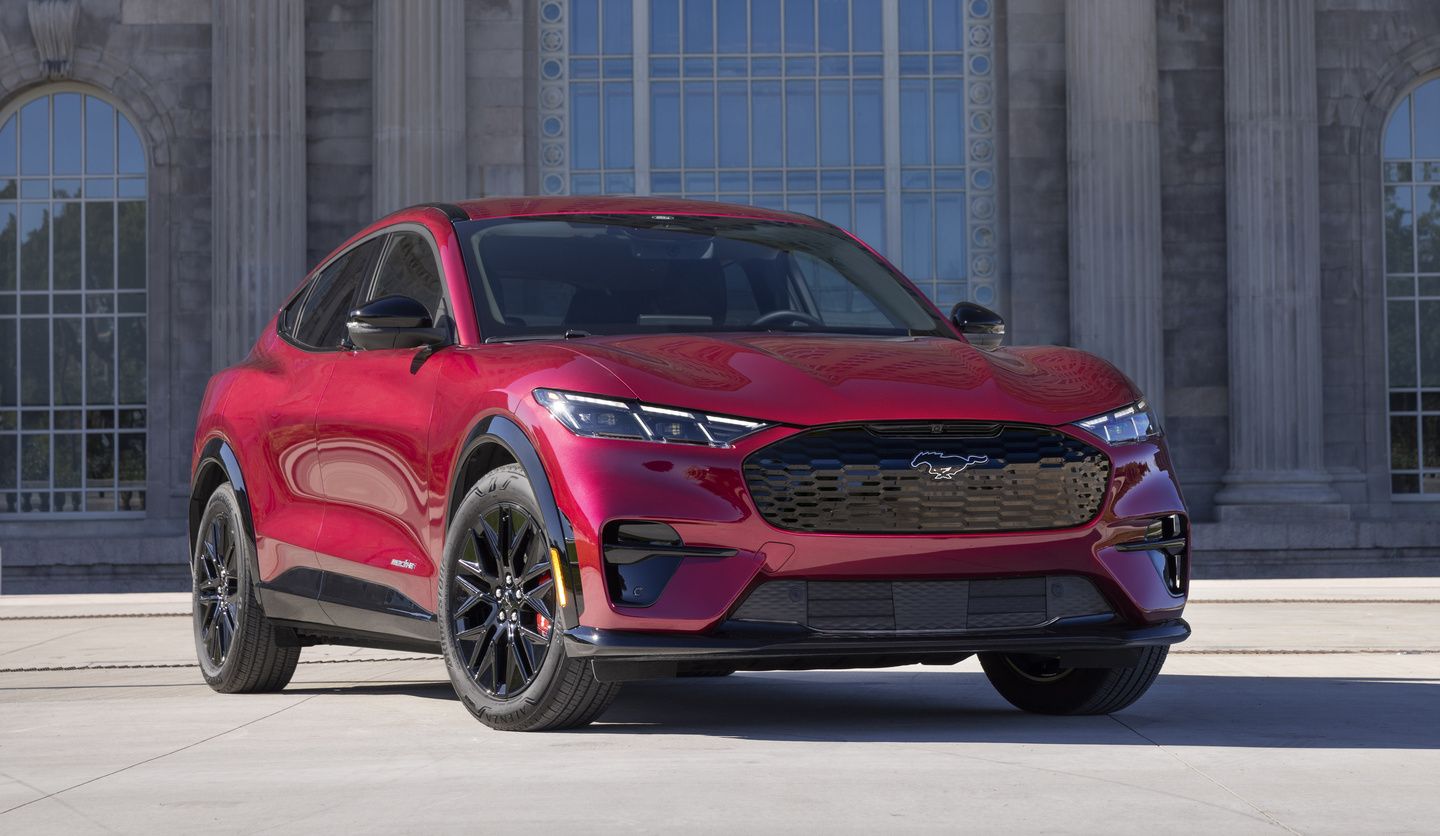
Ford’s Mustang Mach-E, part of Carson’s current lineup, is built around DC fast charging as a core part of ownership, and its onboard route planning can incorporate charge station routing and battery preconditioning directly into a trip. Checking your specific vehicle’s connector type and confirming any adapter requirements before departure is worth the five minutes it takes.
Key Takeaways
|
Planning Step |
What to Do |
|
Charging window |
Arrive around 10 to 20%, depart around 70 to 80% |
|
Route planning |
Map stops in advance using a charging app or built-in navigation |
|
Hot weather |
Use built-in navigation to trigger battery preconditioning |
|
Connector type |
Confirm CCS, NACS, or CHAdeMO compatibility before departure |
Plan Your Summer Trip at Carson Automotive Group
Understanding the charging curve turns a long summer road trip from a source of range anxiety into a straightforward plan. Visit Carson Automotive Group in Victoria to talk with the team about DC fast-charging capability across the lineup and get your next long-haul trip mapped out with confidence.