Adaptive Cruise vs. Hands-Free Driving: What Ford BlueCruise, Mazda MRCC, and Land Rover Actually Do
May 04 2026,
More and more vehicles on Canadian roads today carry badges like “adaptive cruise,” “lane-centering,” and “hands-free highway driving.” If you have seen these features listed on a spec sheet or heard a salesperson mention them, you may have wondered what they actually do and whether they change the day-to-day experience of driving. The short answer: yes, in ways that go well beyond what traditional cruise control ever offered.
Carson Automotive Group in Victoria carries Ford, Lincoln, Mazda, Mitsubishi, and Land Rover, which means the showroom floor covers a wide cross-section of how these technologies have developed. This guide explains what each system does in plain language, how the major driver-assist platforms from these brands work in practice, and what questions to ask before you commit to a purchase.
What Adaptive Cruise Control Actually Does
Standard cruise control holds a set speed. That is its entire job. Adaptive cruise control goes further by using sensors, typically a forward-facing radar or camera, to detect the vehicle ahead and automatically adjust your speed to maintain a safe following distance.
If traffic slows down, the system slows down with it. If the road ahead opens up, it accelerates back toward your set speed. On models with Stop and Go capability, the system can bring the vehicle to a complete stop in heavy traffic and resume when the vehicle ahead moves again, without the driver touching the brake or accelerator pedal.
This is not self-driving. The driver remains responsible at all times and must be ready to take over. Adaptive cruise is a tool to reduce workload on long stretches and in congested conditions, not a replacement for attention.
What Lane-Centering and Lane-Keeping Do
Lane-keeping and lane-centering are two related but distinct features. Lane-keeping assistance detects when the vehicle drifts toward a lane marking without the turn signal active and applies a gentle corrective nudge to steer it back. It is reactive.
Lane-centering is more active: it continuously applies small steering inputs to keep the vehicle centred in its lane rather than waiting for it to drift. Both systems require visible lane markings to function. Both still require the driver to keep their hands on the wheel in most implementations, and in all cases the driver must remain engaged and watching the road.
These systems work best on well-marked highways. They are less reliable on roads where lane lines are faded, absent, or obscured by snow.
Ford BlueCruise: When Hands-Free Is Permitted
Ford BlueCruise is the most clearly different system available through Carson, because it adds a hands-free layer on top of adaptive cruise and lane-centering under specific conditions.
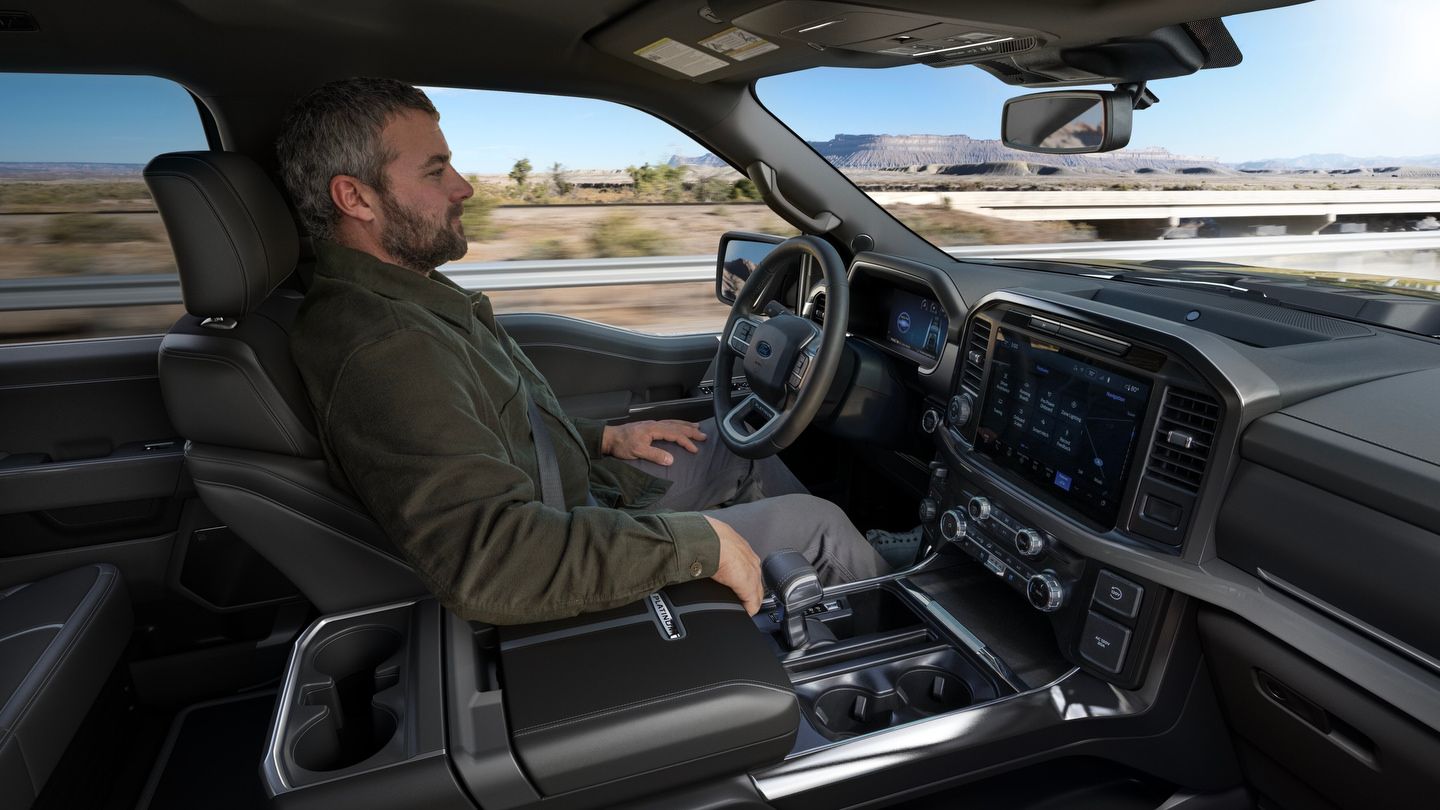
On pre-mapped, divided highways that Ford calls Blue Zones — covering more than 200,000 km of North American roads including major Canadian highways — BlueCruise allows the driver to remove their hands from the wheel while the system manages acceleration, braking, and steering within the lane. A driver-facing infrared camera monitors eye position and head orientation continuously. If the driver looks away from the road, visual and audible alerts prompt them to re-engage.
When the system is active in a Blue Zone, the instrument cluster displays a blue indicator and a Hands-Free notification. The system is activated through the same steering wheel controls as regular cruise control: set a speed, set a following distance, and BlueCruise manages the rest within qualifying zones.
Newer versions of BlueCruise add refinements including subtle in-lane repositioning to create more space when passing large trucks, and hands-free lane changes when the driver activates the turn signal. These additions improve comfort on long runs without changing the fundamental principle: the driver is always responsible, and the system is always a driver-assist tool.
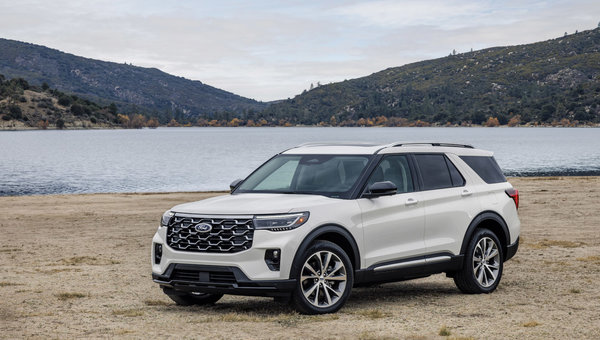
BlueCruise is available on select Ford models including the Explorer, as well as Lincoln models through Lincoln’s version of the technology. Hands-free operation applies to mapped divided highways only. City streets, undivided rural roads, and any road not in the Blue Zone database require conventional operation.
- BlueCruise uses adaptive cruise, lane-centering, and a driver-monitoring camera together
- Hands-free operation is available only in pre-mapped Blue Zones
- The driver must maintain visual attention at all times; the system monitors this actively
- Available on select Ford and Lincoln models at Carson in Victoria
Mazda Radar Cruise Control: Confident Highway and City Driving
Mazda’s approach to adaptive cruise is called Mazda Radar Cruise Control, or MRCC. It uses a forward-facing radar sensor to detect vehicles ahead and automatically adjust speed to maintain a set following distance, accelerating and decelerating to match traffic flow within preset limits.
On many current Canadian Mazda models, MRCC with Stop and Go can bring the vehicle to a complete stop in heavy traffic and resume automatically when conditions allow, depending on the model and configuration. This makes it particularly useful in congested driving where the pace drops to a crawl for extended periods.
MRCC is part of Mazda’s i-ACTIVSENSE suite, which also includes Smart Brake Support for automatic emergency braking, Blind Spot Monitoring with Rear Cross Traffic Alert, Emergency Lane Keeping Assist, Traffic Sign Recognition, and Driver Attention Alert. These features work together to reduce the mental load of long highway drives and dense traffic conditions.
Mazda pairs MRCC with lane-keeping technology that applies steering assistance to help keep the vehicle centred in its lane when markings are clearly visible. Hands on the wheel are required throughout. This is a conventional adaptive cruise and lane-support system, without the hands-free layer BlueCruise adds on specific highways.
Jaguar Land Rover Driver-Assist: Confidence on Long BC Drives
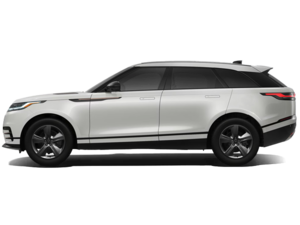
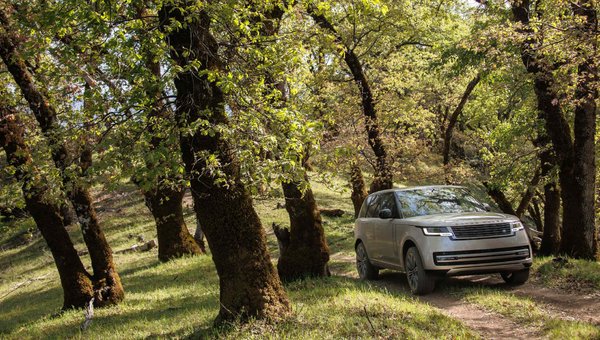
Land Rover, available at Carson through its dedicated Victoria location, integrates adaptive cruise and lane assistance into its InControl driver-assist suite across its model range.
Land Rover’s adaptive cruise functionality lets drivers set a cruising speed and a following distance, with the vehicle automatically adapting to slowing traffic ahead. Lane Keep Assist detects unintentional drifting and applies corrective steering torque to guide the vehicle back toward the lane centre.
Additional features in Land Rover’s suite include Traffic Sign Recognition and an Adaptive Speed Limiter that can read speed limit signs and adjust the vehicle’s set speed accordingly. Blind Spot Assist warns of vehicles in the adjacent lane and can apply additional steering input to help avoid a potential collision during a lane change. Emergency Braking can warn the driver and automatically apply the brakes if a collision threat is detected and the driver does not respond.
Two features stand out for BC families covering long distances. Driver Condition Monitor tracks steering, braking, and throttle inputs to detect signs of fatigue and can suggest a rest stop when patterns suggest the driver may be tiring. Rear Collision Monitor can activate the hazard lights automatically if a fast-approaching vehicle from behind is detected as a collision risk.
These systems are driver-assist features throughout. Hands remain on the wheel, eyes remain on the road, and the driver retains full responsibility. The value they add is reduced fatigue and an additional layer of situational awareness on routes where concentration naturally begins to slip.
What to Ask and Test Before You Buy
The way these systems feel in real use varies more than spec sheets suggest. These are the most useful questions to explore on a test drive:
Does it work in stop-and-go? Not all adaptive cruise systems include Stop and Go. If you regularly deal with congested traffic, confirm whether the system supports a full stop and resume.
Do I need to keep my hands on the wheel? For every system except BlueCruise in a Blue Zone, the answer is yes. Ask the product specialist to demonstrate exactly what the system expects from the driver.
How clearly does it tell me when it is on or off? Good driver-assist systems make their active state obvious. Look at the instrument cluster during the test drive.
How does it handle bad weather or faded markings? No adaptive cruise or lane-assist system performs identically in heavy rain, fog, or snow as it does on a clear, dry highway. Ask what the system’s known limitations are.
What happens when I need to take over? The handoff from system to driver should be smooth and obvious. Test this at low speed in a safe environment during your appointment.
Learn More at Carson Automotive Group in Victoria
Driver-assist technology is best understood behind the wheel, not on a webpage. Visit Carson Automotive Group in Victoria to experience Ford BlueCruise, Mazda’s MRCC and i-ACTIVSENSE suite, and Land Rover’s InControl driver-assist systems with a product specialist who can walk you through exactly how each one works on the road.