2026 All-Terrain Technology: Advanced AWD Systems for British Columbia
December 26 2025,
British Columbia's diverse terrain demands vehicles that can handle everything from coastal highways to mountain passes and forest service roads. The 2026 model year brings significant advances in all-terrain technology, with systems that predict traction loss before it happens, adapt suspension settings in real-time, and provide unprecedented control on challenging surfaces.
For drivers in Victoria and across British Columbia, these innovations translate to safer winter commutes, more confident backcountry exploration, and enhanced capability when conditions turn difficult.
Predictive All-Wheel Drive Systems
Modern all-wheel drive has evolved beyond reactive systems that engage after wheels slip. The 2026 Mazda CX-90 features rear-biased i-Activ AWD that monitors steering input, wheel load, and road conditions to anticipate traction loss before it occurs. This predictive approach maintains momentum on slippery surfaces by adjusting torque distribution proactively rather than responding to wheelspin.
The 2026 Mitsubishi Outlander takes a different approach with Super All-Wheel Control (S-AWC), which integrates driving and braking forces across all four wheels. The system offers three selectable modes: ECO for efficient daily driving, NORMAL for balanced dynamics, and POWER for maximum acceleration performance. S-AWC adds selective braking control to manage vehicle yaw and cornering dynamics beyond standard AWD capabilities.
Advanced Terrain Management
The 2026 Ford Bronco sets the benchmark with up to seven G.O.A.T. Modes (Goes Over Any Type of Terrain) that optimize traction, throttle response, and drivetrain performance for nearly all conditions. Trail Turn Assist locks the inside rear wheel during low-speed manoeuvres to dramatically reduce turning radius—particularly useful on tight forest service roads. Trail Control maintains consistent speed on challenging terrain, allowing drivers to focus on steering.
The Bronco offers two 4×4 systems: Part-Time Selectable 4×4 for manually switching between 2H, 4H, and 4L, and Advanced 4×4 with Automatic On-Demand Engagement that actively monitors traction and engages the front axle when needed.
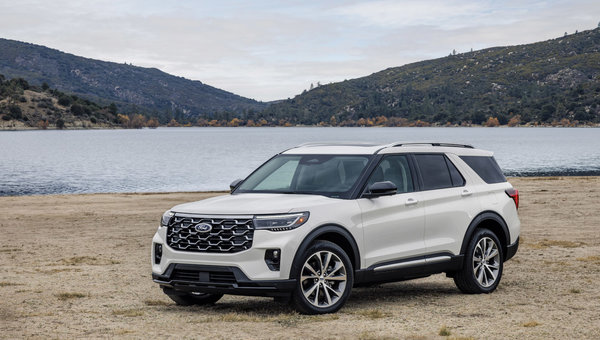
The 2026 Ford Explorer Tremor replaces the discontinued Timberline with enhanced off-road capability. A 1-inch suspension lift increases ground clearance to 221 mm, while off-road tuned suspension with Tremor-specific springs and anti-roll bars improves articulation. Skid plates protect vital components, and a limited-slip differential enhances traction. All Explorers include a Terrain Management System with six drive modes: Normal, Eco, Sport, Tow/Haul, Slippery, and Trail.
Sophisticated Differential and Traction Control
The 2026 Land Rover Defender features Terrain Response 2 with Dynamic Program and Configurable Terrain Response, allowing drivers to customize settings for specific conditions. Electronic Active Differential with Torque Vectoring by Braking distributes power precisely to individual wheels. The twin-speed transfer box provides high and low range options, while Adaptive Off-Road Cruise Control maintains set speeds on challenging terrain.
All-Terrain Progress Control (ATPC) functions like cruise control for off-road situations, managing throttle and braking to maintain steady progress over obstacles. Hill Descent Control provides controlled descents on steep grades without driver input on the brake pedal.
Water Fording and Weather Capability
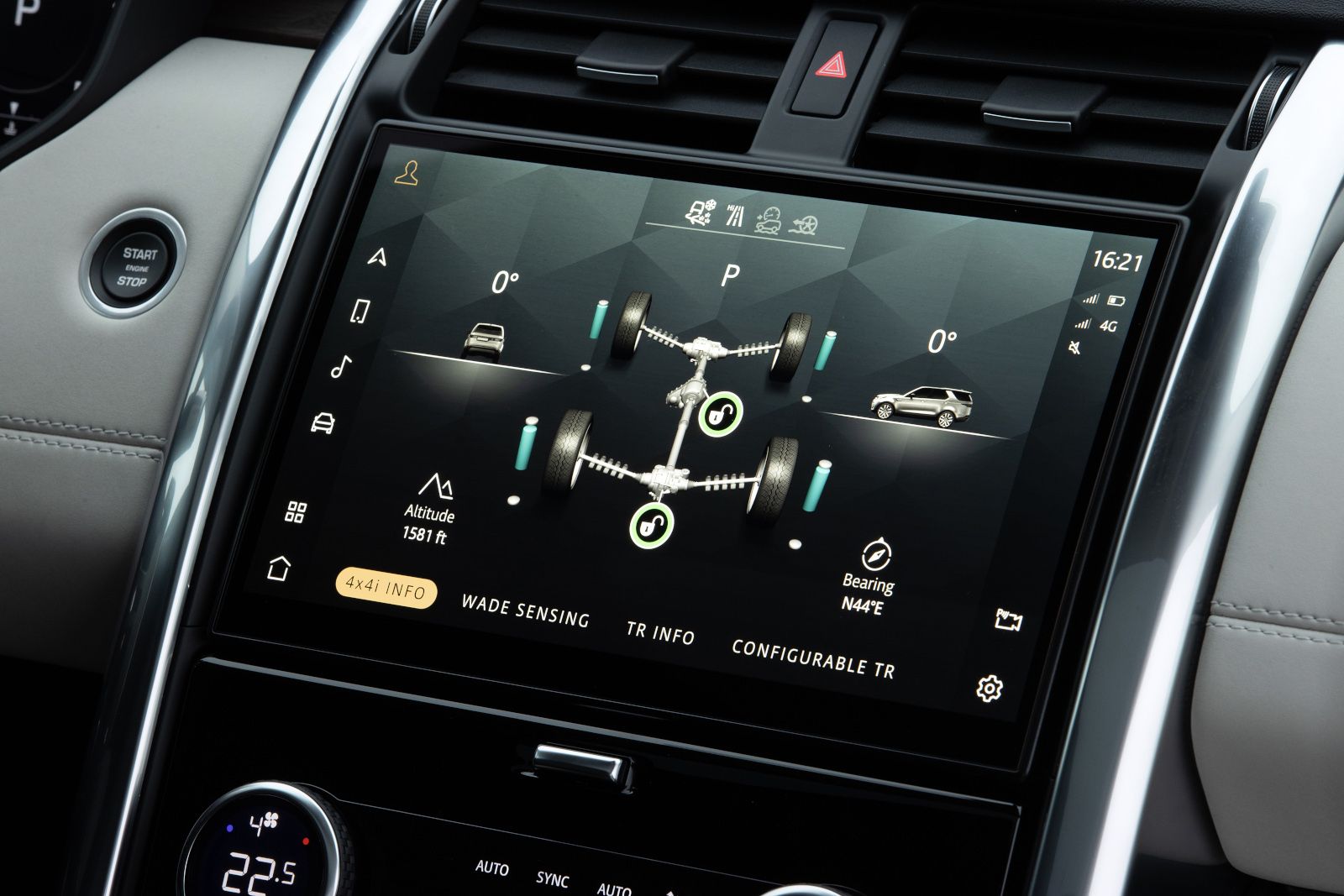
The 2026 Range Rover Sport offers Wade Sensing technology for confident water crossings up to 800-900 mm depth. Sensors mounted in mirror housings measure water depth in real-time, providing visual and audible warnings as the vehicle approaches maximum wading capacity. When Wade Mode activates, the air suspension raises to maximum height and optimizes vehicle systems for deep water performance.
For British Columbia's wet climate and seasonal flooding, this capability provides utility. ClearSight Ground View enhances visibility of obstacles by projecting a virtual view of the ground beneath the vehicle onto the touchscreen.
Intelligent Drive Mode Integration
The 2026 Jaguar F-PACE comes standard with all-wheel drive across all trims paired with an eight-speed automatic transmission. The P400 R-Dynamic S features a mild-hybrid turbocharged 3.0L inline-six producing 395 horsepower and 406 lb-ft of torque. Standard safety and handling features include roll stability control, hill holder, adaptive cruise control with stop/go functionality, blind spot monitoring, lane departure warning, and rear cross-traffic alert.
Lincoln's 2026 SUV lineup features intelligent all-wheel drive systems designed for confident performance across various road conditions. The Nautilus provides AWD capability combined with advanced driver assistance technologies including Pre-Collision Assist with Automatic Emergency Braking and Intersection Assist, Cross-Traffic Alert with Braking, Lane Keeping Assist, and Evasion Assist.
Key Technologies at a Glance

|
Feature |
Benefit for BC Drivers |
|
Predictive AWD (Mazda i-Activ) |
Anticipates traction loss on wet coastal roads |
|
Terrain Response 2 (Land Rover) |
Customizable settings for diverse BC terrain |
|
G.O.A.T. Modes (Ford Bronco) |
Seven optimized settings for any surface |
|
Wade Sensing (Range Rover) |
Safe water crossings up to 900 mm |
|
S-AWC (Mitsubishi) |
Integrated braking and power distribution |
Real-World Applications for British Columbia
Vancouver Island Exploration: The combination of Trail Turn Assist and reduced turning radius helps navigate tight forest service roads leading to remote beaches and hiking trailheads.
Whistler Access: Predictive AWD systems maintain traction on snow-covered Sea-to-Sky Highway approaches, while hill descent control provides confidence on steep mountain grades.
Interior Backcountry: Configurable terrain response settings adapt to rapidly changing conditions—from gravel forestry roads to muddy logging trails to rocky creek crossings.
Coastal Weather: Wade sensing and raised suspension settings handle seasonal flooding on low-lying coastal routes, while advanced traction management maintains control on rain-slicked highways.
Technology Evolution Timeline
The shift from reactive to predictive systems marks a significant advance in all-terrain technology. Earlier AWD systems waited for wheels to slip before engaging additional traction. Current systems monitor dozens of inputs—steering angle, throttle position, wheel speed, brake pressure, suspension travel—to anticipate loss of traction and adjust power delivery before wheels spin.
Selectable drive modes have expanded from simple 2WD/4WD/4WD Low options to comprehensive terrain-specific programs. The 2026 Ford Bronco's seven G.O.A.T. Modes optimize not just power delivery, but also transmission shift points, throttle mapping, stability control intervention, and differential locking—all calibrated for specific surfaces.
Electronic differential control has become more sophisticated, moving beyond simple locking to active torque vectoring that can send different amounts of power to individual wheels. This improves both traction on loose surfaces and handling precision on paved roads.
Matching Technology to Your Needs
Daily Commuters with Occasional Adventure: Mazda i-Activ AWD or Mitsubishi S-AWC provide transparent operation for daily driving with enhanced capability when needed.
Serious Off-Road Enthusiasts: Ford Bronco with G.O.A.T. Modes and Trail Turn Assist, or Land Rover Defender with Terrain Response 2 and configurable programs.
Luxury with Capability: Range Rover Sport with Wade Sensing and air suspension, or Lincoln Nautilus with intelligent AWD and advanced driver assistance.
Balanced Performance: Ford Explorer Tremor with 221 mm ground clearance and Terrain Management System offers off-road capability in a family-friendly package.
Experience Advanced All-Terrain Technology
The 2026 model year brings innovation in all-terrain capability—systems that predict rather than react, adapt to conditions in real-time, and provide control on challenging surfaces. For British Columbia drivers who demand vehicles capable of handling diverse terrain and weather conditions, these advances deliver improvements in confidence and capability.
Test drive the 2026 Ford Bronco, Land Rover Defender, or Range Rover Sport at Carson Automotive Group in Victoria to experience these advanced all-terrain systems firsthand.