Advanced Driver-Assistance Systems: How 2026 Technology Protects Vulnerable Road Users
February 20 2026,
Victoria's identity as one of Canada's most walkable and bike-friendly cities creates a unique responsibility for drivers. With Galloping Goose Trail commuters, downtown pedestrians, and UVic students on bikes sharing the road daily, the vehicles we choose matter. The 2026 model year marks a major evolution in how advanced driver-assistance systems (ADAS) detect, predict, and protect cyclists and pedestrians - transforming these features from reactive crash avoidance into proactive vulnerable road user (VRU) protection.
This shift isn't marketing language. It's measurable, testable technology built into the vehicles available at Carson Automotive Group. For families and professionals considering their next vehicle purchase, understanding how these systems work - and which models offer them - provides both peace of mind and a tangible contribution to shared street safety across British Columbia.
The Evolution of Vulnerable Road User Detection
Early automatic emergency braking (AEB) systems, introduced between 2012 and 2018, were designed primarily to detect the large radar signature of vehicles ahead. Pedestrian detection existed but struggled in real-world conditions - particularly at night, in rain, or when pedestrians moved laterally across the road rather than walking parallel to traffic flow.
Second-generation ADAS, deployed from 2019 through 2023, improved camera resolution and machine-learning algorithms for more reliable pedestrian detection in favourable conditions. However, cyclists - narrower, faster, and less predictable than pedestrians - remained a persistent challenge for detection systems.
2026 VRU-specific systems mark a fundamental redesign. Modern ADAS now uses dedicated vulnerable road user classification, where the system distinguishes between a car, a pedestrian, a cyclist, a motorcyclist, and even a child versus an adult. Each category triggers different response profiles because the appropriate braking response to a cyclist cutting left differs from a pedestrian stepping off a curb.
How Path Prediction Algorithms Work
The most important technical advancement in 2026 ADAS is the shift from detection to prediction. Rather than waiting for a pedestrian to enter the vehicle's path, current systems track body orientation, walking direction, and speed over multiple frames to calculate where the person will be in one to three seconds. If the projected path intersects with the vehicle's trajectory, a warning or brake intervention is triggered before the collision becomes imminent.
Cyclist-specific logic classifies the merged silhouette of rider and bike, tracks wheel rotation to estimate speed, and monitors handlebar angle as a proxy for intended direction change. Some systems also recognize cycling hand signals - a critical capability on Victoria's bike-lane-equipped streets.
Child detection addresses the fact that children move more unpredictably and sit lower in the sensor field of view. Systems trained on larger and more diverse datasets are better at classifying small, fast-moving objects near parked cars or between obstacles - scenarios common on residential streets throughout British Columbia.
Intersection-specific modes apply heightened sensitivity when the vehicle detects it is in or approaching an intersection, where VRU encounters are statistically most likely. Detection range and warning thresholds are adjusted automatically.
The Sensor Stack Behind VRU Detection
Multiple sensors are required to reliably detect vulnerable road users across all conditions. Single-sensor systems fail in too many real-world scenarios.
Cameras provide the detail needed for classification - determining whether an object is a person, a bike, or a shopping cart. They read body posture and facing direction, and work well in daylight and moderate conditions. However, heavy rain, glare from wet pavement, and backlighting from low sun compromise camera-only detection.
Radar detects micro-Doppler signatures - the distinct motion patterns of a pedestrian's swinging arms or a cyclist's rotating wheels differ measurably from a stationary object or a vehicle. This provides detection even when visual conditions are poor.
Sensor fusion pairs both: the camera classifies the object, the radar confirms motion and distance, and the system responds with higher confidence than either could provide alone. In 2026 systems, this fusion happens in fractions of a second using on-board processing.
Night and Low-Light VRU Detection
Victoria's dark, rainy autumn and winter evenings present specific hazards. Low-light pedestrian detection has historically been the weakest link in camera-based systems; pedestrians in dark clothing on unlit streets were frequently missed.
2026 systems address this through higher-resolution, more light-sensitive imaging sensors and infrared illumination that works with the camera to detect pedestrians beyond the visible headlight range. Premium models integrate thermal imaging that detects body heat regardless of lighting conditions.
This capability matters on the Galloping Goose extension at dusk, at Cook Street Village crosswalks after a rainy November evening, or near Beacon Hill Park where runners in dark clothing share the road with vehicles.
2026 ADAS Features Across Available Brands
|
Feature |
Ford Co-Pilot360 2.0 |
Lincoln Co-Pilot360 2.2 Plus |
Mitsubishi MI-PILOT Assist 2.0 |
|
Pedestrian AEB |
360° coverage, 130 km/h max speed |
160 m forward detection with LiDAR option |
10 - 180 km/h range, 24 GHz radar |
|
Cyclist Detection |
Nighttime recognition up to 100 m |
Evasive Steering Assist up to 80 km/h |
Lane Change Assist with 70 m rear detection |
|
Intersection Assist |
Up to 50 m range, mitigates 30 km/h impacts |
Junction Turn Assist (95% IIHS efficacy) |
Unseen Pedestrian Braking up to 40 km/h |
|
Feature |
Mazda i-Activsense |
Jaguar JaguarDrive Control |
Land Rover Driver Assist Pack |
|
Pedestrian AEB |
190 m forward range with infrared nighttime ID |
200 m detection with 3D Surround Camera |
250 m forward radar with Wade Sensing |
|
Cyclist Detection |
Blind Spot Monitoring with cyclist icon, haptic feedback |
Trajectory prediction with 360° view |
Reverse Traffic Detection with 40 m rear cyclist braking |
|
Intersection Assist |
Front Cross Traffic Alert, 15 - 60 km/h braking |
High-Speed AEB up to 160 km/h |
ClearSight Ground View for low-speed scenarios |
Ford and Lincoln: BlueCruise Integration
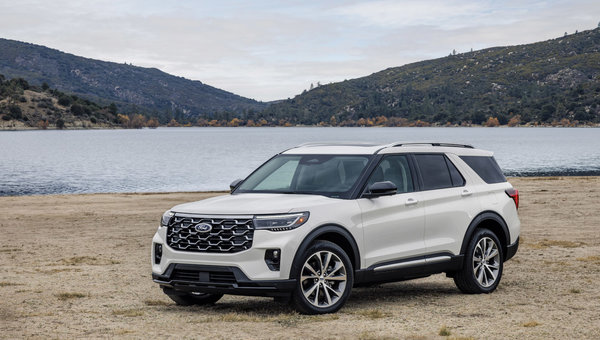
Ford's Co-Pilot360 2.0 with BlueCruise 1.5 is standard on select 2026 F-150 Lightning and Mustang Mach-E models, with optional availability on the F-150 and Edge. The system uses 5 mmWave radars and 12 cameras to provide 360° coverage, detecting adults, children, and cyclists up to 130 km/h vehicle speed. Nighttime cyclist recognition extends up to 100 m using low-light camera enhancement.
Intersection Assist detects cyclists and pedestrians at intersections up to 50 m range and can mitigate impacts up to 30 km/h. Post-Impact Braking is included to prevent secondary collisions after an initial impact.
Ford Co-Pilot360 2.0 package ranges from $2,500 - $4,200, with BlueCruise subscription at $2,750 for three years.
Lincoln's Co-Pilot360 2.2 Plus, standard on 2026 Aviator, Nautilus, and Corsair, adds Active Glovebox with Pedestrian/Cyclist AEB using 12 ultrasonic sensors and an optional LiDAR system. Detection range extends to 160 m forward and 60 m side/rear. Evasive Steering Assist provides cyclist avoidance up to 80 km/h with a 1.2G lateral acceleration limit. Junction Turn Assist achieved 95% efficacy in IIHS 2026 testing, protecting turning cyclists.
Lincoln Co-Pilot360 2.2 Plus package ranges from $3,800 - $5,500.
Mitsubishi: Accessible VRU Protection
Mitsubishi's MI-PILOT Assist 2.0 is standard on the 2026 Outlander PHEV and Eclipse Cross, with optional availability on RVR. The system uses 24 GHz radar and camera fusion to provide Forward Collision Mitigation with Pedestrian/Cyclist Detection across a 10 - 180 km/h range, detecting cyclist speeds up to 30 km/h.
Lane Change Assist with Blind Spot Cyclist Warning provides 70 m rear detection. Unseen Pedestrian Braking addresses cornering scenarios up to 40 km/h - critical for Victoria's residential intersections. The MI-PILOT Assist 2.0 package ranges from $1,900 - $3,200.
Mazda: Infrared Nighttime Recognition
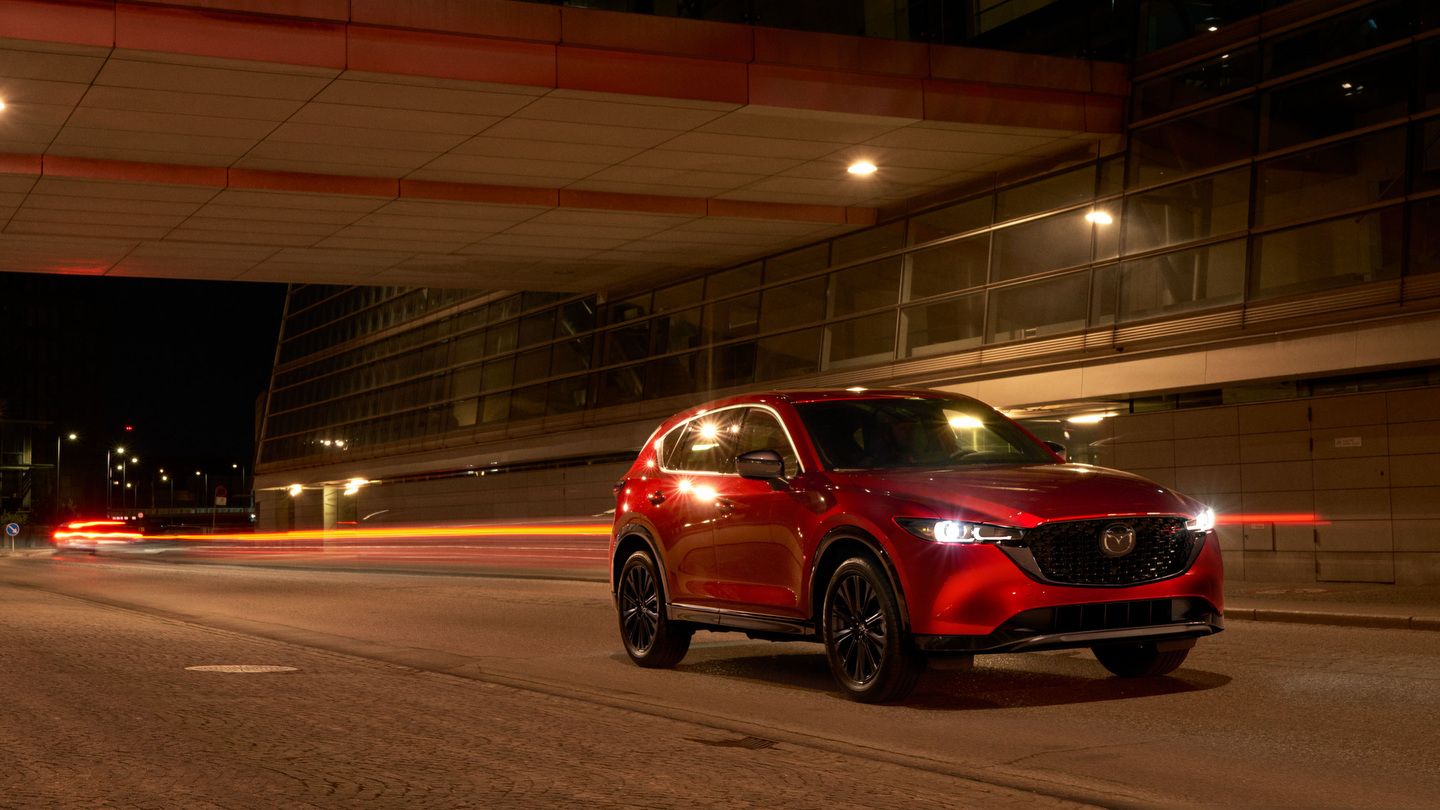
Mazda's i-Activsense Suite with Vision Active Driving Assist is standard on 2026 CX-90, CX-70, and Mazda3, with optional availability on CX-5. The system provides 190 m forward detection range using radar and camera fusion. Infrared nighttime cyclist identification addresses low-light scenarios common across British Columbia.
Front Cross Traffic Alert detects cyclists at junctions and provides braking intervention between 15 - 60 km/h. Blind Spot Monitoring with cyclist icon provides 50 m range and haptic steering wheel feedback. The Safety Package 360+ ranges from $2,100 - $3,900.
ICBC data indicates equipped Mazda models qualify for insurance discounts in British Columbia.
Jaguar and Land Rover: Premium VRU Technology
Jaguar's JaguarDrive Control with Adaptive Dynamics on 2026 F-Pace and E-Pace uses 12 cameras to provide 200 m detection with 360° view and cyclist trajectory prediction. Blind Spot Assist with cyclist detection provides intervention up to 70 km/h. High-Speed AEB protects at highway speeds up to 160 km/h. The system ranges from $6,200 - $8,800.
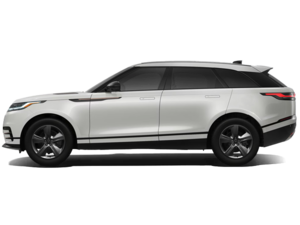
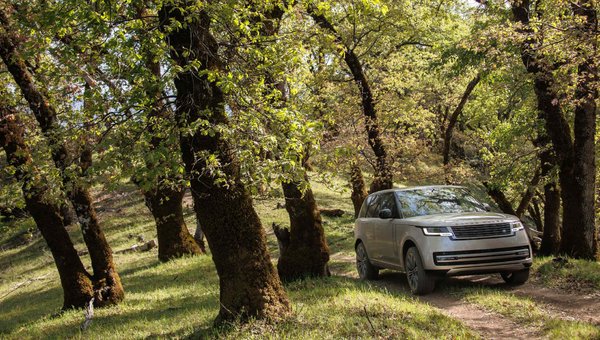
Land Rover's Adaptive Off-Road Cruise Control with Driver Assist Pack on 2026 Defender, Discovery, and Range Rover provides Wade Sensing with 360° Parking Aid and ClearSight Ground View for pedestrian and cyclist detection in off-road and low-speed scenarios up to 50 km/h. High-Speed Active Lane Keep with cyclist evasion uses 250 m forward radar. Reverse Traffic Detection provides 40 m rear cyclist braking. The Technology Pack ranges from $4,500 - $7,200.
Both brands offer winter calibration for cyclist detection through British Columbia dealers, addressing reduced visibility conditions common during the province's wet season.
What the Data Shows
Transport Canada and NHTSA data consistently show that pedestrian and cyclist fatalities are disproportionately likely in low-speed urban environments - exactly the conditions where AEB is most effective, since the system has time to act. Insurance Institute for Highway Safety (IIHS) testing has shown that vehicles equipped with pedestrian AEB reduce pedestrian fatality rates measurably in real-world crash data.
BC ICBC data shows 15% pedestrian collision reduction in 2025 trials involving equipped vehicles. Transport Canada's ongoing Motor Vehicle Safety Regulations consultations are moving toward making pedestrian AEB mandatory on new light-duty vehicles, transitioning this technology from a premium feature to a baseline expectation.
Which Models Offer VRU Protection
VRU detection is now available across multiple price points:
Ford: Co-Pilot360 2.0 is standard on select F-150 Lightning and Mustang Mach-E trims, optional on the F-150 and Edge. Excludes Reverse Brake Assist on base XL trims and heavy-duty Super Duty models.
Lincoln: Co-Pilot360 2.2 Plus is standard on Aviator, Nautilus, and Corsair. Excludes base Reserve I trims.
Mitsubishi: MI-PILOT Assist 2.0 is standard on Outlander PHEV and Eclipse Cross, optional on RVR. Excludes 3-row Outlander base S trim.
Mazda: i-Activsense Suite is standard on CX-90, CX-70, and Mazda3, with optional availability on CX-5. Excludes rear AEB on GS trims.
Jaguar: JaguarDrive Control is available on F-Pace and E-Pace. Excludes base Pure trim.
Land Rover: Driver Assist Pack is available on Defender, Discovery, and Range Rover. Excludes base Defender 90 S.
Experience Safety Technology at Carson Automotive Group
In a city that has invested heavily in protected bike lanes and pedestrian infrastructure, driving a vehicle that actively contributes to shared street safety is a meaningful choice. The technology exists across Ford, Lincoln, Mitsubishi, Mazda, Jaguar, and Land Rover models. The question is whether your next vehicle has it.
Our team at Carson Automotive Group is ready to demonstrate how these systems work in real-world scenarios and help you find the right model for your needs. Book your test drive today at Carson Automotive Group.