Hands-Free Highway Driving: How 2026 Semi-Autonomous Technology Transforms Long Trips in British Columbia
December 29 2025,
Long highway drives through British Columbia test even the most patient drivers. Hours on the Trans-Canada Highway or the Sea-to-Sky corridor demand constant attention—lane positioning, speed management, traffic monitoring. By the time you reach your destination, fatigue has replaced the excitement of the journey. The 2026 model year brings a solution: hands-free driving technology that handles steering, braking, and acceleration on pre-mapped highways, allowing drivers to arrive refreshed rather than exhausted.
Semi-autonomous systems from multiple manufacturers now operate on British Columbia's major routes, combining adaptive cruise control with lane-centring steering and driver monitoring. These Level 2+ systems don't replace driver attention—they support it, reducing the physical and mental load of highway driving while keeping safety paramount. For families commuting between Victoria and Vancouver, professionals travelling to the Interior, or anyone facing multi-hour highway journeys, this technology fundamentally changes the driving experience.
Ford BlueCruise and Lincoln ActiveGlide: North America's Most Accessible Hands-Free Systems
Ford BlueCruise operates on over 210,000 kilometres of pre-qualified divided highways across Canada and the United States, making it one of the most widely available hands-free systems in North America. Consumer Reports rated BlueCruise as the top active driving assistance system, recognizing its balance of capability and accessibility. The system uses radar sensors, front cameras, and GPS data to maintain lane positioning and safe following distances through intelligent adaptive cruise control with stop-and-go capability.
When entering a designated Hands-Free Blue Zone on British Columbia highways like Highway 1 or Highway 5, the instrument cluster displays a prompt indicating BlueCruise is available. Drivers activate the system by pressing the Adaptive Cruise Control button. A driver-facing camera continuously monitors attention through eye tracking—if the driver's gaze moves away from the road for extended periods, visual and audible alerts prompt refocus. The system allows cooperative steering, meaning drivers can adjust positioning at any time while BlueCruise remains engaged.
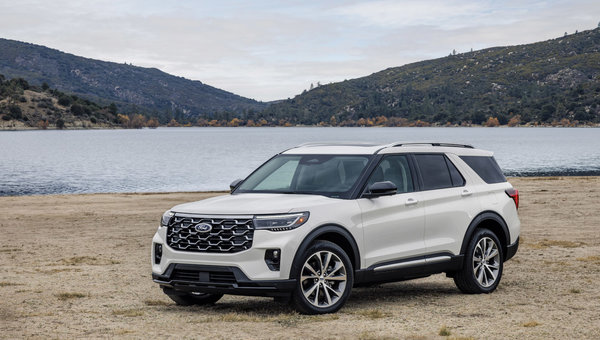
BlueCruise 1.5 introduces Automatic Lane Change capability on select 2025 and 2026 models. The system can autonomously initiate lane changes to pass slower traffic or move from ending lanes, monitoring the driver's head position and eye direction to ensure continued attention. The 2025 Ford Explorer and 2025 Ford Expedition offer BlueCruise hardware on select trims, with customers choosing annual or monthly activation plans following a complimentary 90-day trial.
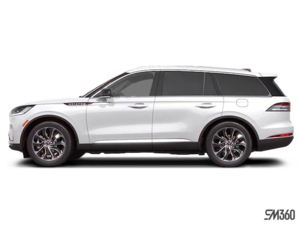
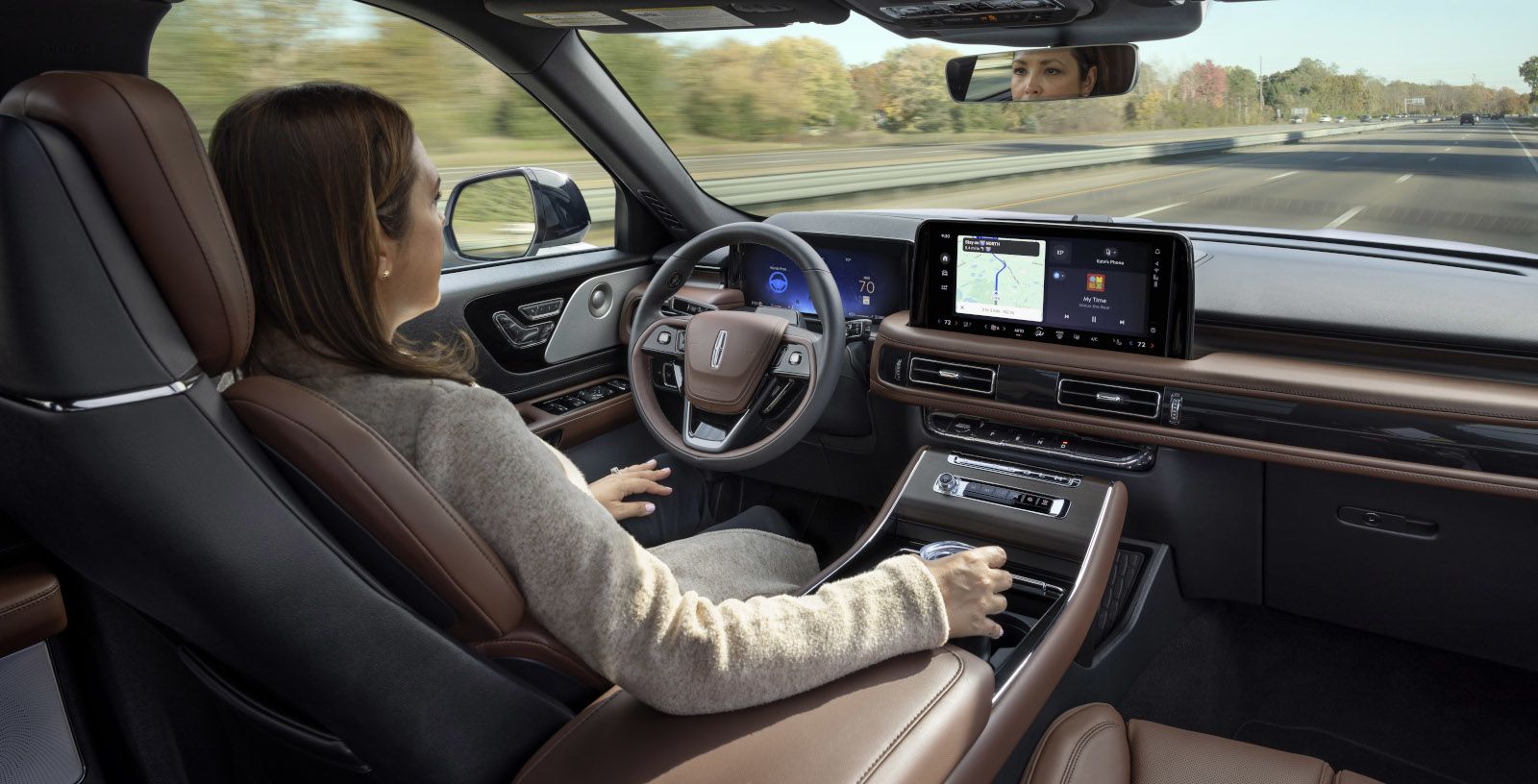
Lincoln ActiveGlide delivers the same core capabilities with luxury-brand refinement. Debuting on the 2022 Lincoln Navigator, ActiveGlide now equips an estimated 90% of Navigator models. The system uses a driver-facing camera within the instrument cluster to monitor attentiveness continuously. When hands-free driving engages, a blue animation shows the steering wheel without hands, and an icon appears in the head-up display projected onto the windshield. The 2025 Lincoln Aviator offers ActiveGlide with features including Lane Change Assist—allowing lane changes with a tap of the turn signal when the path is clear—and In-Lane Repositioning, which subtly shifts away from vehicles in adjacent lanes to provide more space.
Both systems maintain Level 2 semi-autonomous classification, requiring drivers to remain alert at all times. If driver attention lapses, the systems provide escalating warnings before automatically decelerating the vehicle to a stop while maintaining steering control within the lane.
GM Super Cruise: Award-Winning Technology with Automatic Lane Changes
General Motors' Super Cruise won the MotorTrend Best Hands-Free Driving Tech award for its innovation and ease of use. Available on select Chevrolet and GMC vehicles, Super Cruise functions on over 640,000 kilometres of compatible highways in Canada and the United States, using real-time cameras, sensors, GPS, and LiDAR map data to detect curves and maintain lane positioning.
The system requires active Adaptive Cruise Control and Forward Collision Alert to control acceleration, braking, and following distance. A Driver Attention System monitors driver focus continuously. When Super Cruise detects compatible highway conditions with clearly visible lane markings, a white symbol appears on the instrument cluster. Pressing the Super Cruise button engages the feature—when the steering wheel light bar turns green, drivers may remove their hands from the wheel.
Super Cruise offers two advanced lane-change capabilities. Lane Change on Demand activates when the driver signals—the system looks for an opening in the desired lane and executes the change without further input. Automatic Lane Change detects slower vehicles ahead and autonomously initiates the full passing sequence: signalling, changing lanes, passing, signalling again, and returning to the original lane without driver intervention.
The 2026 Chevrolet Silverado EV adds hands-on functionality that keeps the vehicle centred in its lane while adapting to traffic speed with hands on the wheel. When reaching a Super Cruise-enabled road, the steering wheel lightbar turns green and hands-free driving automatically engages. Adaptive Cruise Control now allows drivers to automatically adjust speed to match posted speed limits. The 2025 Cadillac Escalade IQ includes Super Cruise as standard with three years of OnStar connectivity, monitoring driver head position and eye direction to ensure attention while performing both driver-initiated and system-initiated lane changes.
All new 2025 Super Cruise-equipped vehicles include three years of connectivity to support functionality. Following this period, an eligible paid Connected Services plan is required to maintain hands-free capability.
Nissan ProPILOT Assist: Enhanced Lane-Keeping with Navigation Integration
Nissan offers ProPILOT Assist across multiple trim levels of the 2025 and 2026 Rogue, providing adaptive cruise control combined with steering assistance to help keep the vehicle centred in its lane. The system requires drivers to keep both hands on the steering wheel at all times, maintaining Level 2 semi-autonomous classification.
Standard ProPILOT Assist (available on Rogue SV grades) combines Intelligent Cruise Control with Steering Assist. The system operates only when lane markings are clearly detected and does not function in all weather, traffic, and road conditions. Drivers must monitor traffic conditions at all times and remain prepared to immediately take manual control when road, traffic, or vehicle conditions require intervention.
ProPILOT Assist 1.1 (available on Rogue SL and Platinum grades) enhances the experience by using navigation information to proactively adjust speed ahead of curves and freeway interchanges. This Navi-link integration creates a more natural driving experience on highways with varying terrain, reducing the need for manual speed adjustments.
The 2026 Infiniti QX80 also offers ProPILOT Assist with navigation integration, providing the same hands-on lane-keeping and speed management capabilities across the luxury SUV lineup.
BMW Highway Assistant: Eye-Activated Lane Changes at 130 km/h
BMW's Highway Assistant represents the premium end of hands-free technology, allowing drivers to remove their hands from the steering wheel for extended periods at speeds up to 130 km/h on suitable limited-access highways when weather and traffic conditions permit. The system maintains Level 2+ functionality, requiring drivers to remain alert and ready to intervene if necessary.
The 2026 BMW iX and 2027 BMW iX3 feature Highway Assistant with Active Lane Change with Eye Activation. When Highway Assistant is engaged and the vehicle approaches slower-moving traffic, the system recommends a lane change. To accept the recommendation, the driver need only glance into the appropriate side mirror—the iX3 signals and executes the lane change when safe to do so. This eye-activation technology eliminates the need for manual turn signal input, creating a more natural interaction between driver and vehicle.
BMW's Driving Assistant Plus (optional on the iX3) includes Active Cruise Control with Stop & Go and Steering and Lane Control, which applies corrective steering to help drivers stay centred in the lane even at highway speeds. Standard Driving Assistant includes Forward Collision Mitigation with Daytime Pedestrian Protection, Active Blind Spot Warning, Lane Departure Warning with Steering Intervention, and Exit Warning.
Ram Active Driving Assist: Dual-Mode Hands-Free System
The 2026 Ram 1500 offers Active Driving Assist in two modes: Hands-On and Hands-Free. Hands-On mode uses sensors within the steering wheel to measure driver attentiveness, requiring hands on the wheel at all times. Hands-Free mode uses both steering wheel sensors and a driver monitoring camera located atop the steering column to monitor attentiveness, allowing drivers to temporarily remove their hands from the wheel on approved roadways.
Hands-Free mode requires an active Ram Connect subscription through Uconnect Connected Services. Without an active subscription, Hands-On mode remains available. The system includes Assisted Lane Change capability in Hands-Free mode, using sensors including Blind Spot Monitoring to determine if a lane change is possible. When the driver activates the turn signal and a lane change is available, the system begins changing lanes with a green lane change arrow graphic displayed until completion.
If a lane change is not immediately available but a gap in traffic is identified, the system accelerates or decelerates the vehicle prior to changing lanes. An animated yellow lane change arrow appears with screen text "Searching for an Opening" while the vehicle positions itself. Once the lane change initiates, a green arrow displays until completion.
If driver attention lapses, the system provides escalating alerts before executing an Assisted Stop-In-Lane. The system brings the vehicle to a stop in its current lane, secures the vehicle by shifting into Park and applying the parking brake, unlocks the doors, activates hazard lights, and attempts to place an emergency call through the Assist and SOS system.
Mercedes-Benz Active Steering Assist: Comprehensive Lane-Keeping Support
Mercedes-Benz offers Active Steering Assist across multiple 2024–2026 models, providing lane-keeping support with moderate steering intervention to help drivers remain centred in their lane. The system operates on highways, roads, and in city traffic, automatically restarting after coming to a standstill when the driver's hands are on the steering wheel (possible within a 30-second time window).
The 2024 Mercedes-Benz CLE Coupe features enhanced Active Steering Assist with lane recognition at low speeds using an additional 360-degree camera, high availability and cornering performance, and lane centring on highways. When Active Steering Assist is no longer available because lane markings cannot be clearly identified, the system signals this to the driver via a vibrating steering wheel. The steering wheel symbol in the instrument display changes from green to grey.
Active Lane Change Assist supports cooperative lane changes when the neighbouring lane is separated by a broken lane marking and no vehicles are detected in the relevant safety area. Active Emergency Stop Assist brakes the vehicle to a standstill in its own lane if the system detects the driver is no longer continuously intervening in the driving process. At speeds below 60 km/h, the system activates hazard warning lights to warn traffic behind, unlocks the doors when stationary, and calls for help via Mercedes-Benz Emergency Call.
The 2025 Mercedes-Benz G 580 with EQ Technology and 2026 Mercedes-Benz GLC 300 4MATIC SUV include Active Steering Assist as part of comprehensive driver assistance packages. The 2026 Mercedes-Benz CLA will offer enhanced Active Steering Assist Plus and Active Lane Change Assist Plus as digital extras through over-the-air updates following market launch.
Toyota and Hyundai: Lane Tracing Assist with Traffic Jam Support
Toyota's Lane Tracing Assist (LTA) requires Dynamic Radar Cruise Control to function, operating only when detectable lane markings are present. The system uses the front camera and radar sensor to detect lane lines and preceding/surrounding vehicles, operating the steering wheel to maintain lane position on highways and expressways.
The 2025 Toyota Prius PHEV and 2025 Toyota 4Runner feature enhanced LTA with improved lane recognition including detection of certain 3D objects like guardrails. In situations where lane lines are difficult to see or not visible—such as in traffic jams—support is provided using the path of preceding and surrounding vehicles. If the system determines the steering wheel has not been operated for a certain time or is not being firmly gripped, the driver receives alerts and the function temporarily cancels.
The Prius PHEV adds Traffic Jam Assist, which operates at approximately 40 km/h or less on highways and expressways when Dynamic Radar Cruise Control and Lane Tracing Assist are active. The system requires the driver monitor camera to detect the driver is facing forward, the connected service subscription is active, and the driver's door is closed with the seat belt fastened. Traffic Jam Assist includes an Emergency Driving Stop System that monitors driver inputs—if the system determines the driver is inattentive or non-responsive (such as during a medical emergency), it brings the vehicle to a stop if the driver doesn't respond to alerts.
The 2026 Hyundai Palisade offers Navigation-Based Smart Cruise Control that uses navigation data to maintain safe highway speeds. When approaching a curved highway section, the vehicle's speed reduces appropriately before entering the curve, automatically returning to the original setting when leaving the curved section. The system includes Direct Driver Monitoring that continuously assesses the operator's attention level and warns if potentially inattentive or unsafe behaviour is detected.
Honda, Acura, Mazda, Mitsubishi, Kia, and Jaguar Land Rover: Adaptive Systems with Lane-Keeping
Multiple manufacturers offer adaptive cruise control with lane-keeping capabilities that require continuous driver engagement. The 2025 Honda Accord includes Traffic Jam Assist that works with Adaptive Cruise Control and Lane Keeping Assist System to provide steering support in slow-moving traffic. The 2026 Honda HR-V features the same Traffic Jam Assist functionality.
The 2025 Acura MDX offers Active Lane Change Assist that can complete a full lane change automatically when the driver pushes the turn signal stalk halfway in the desired direction while Adaptive Cruise Control and Lane Keeping Assist System are active. This feature is enabled on geo-fenced divided highways detected in Google Maps using Google built-in. Lane Change Collision Mitigation detects if the driver begins changing into an occupied lane or if another vehicle simultaneously changes into the same lane, steering back into the original lane when necessary.
Mazda's i-Activsense suite includes Mazda Radar Cruise Control with Stop & Go that maintains set speed and safe following distance while bringing the vehicle to a complete stop in heavy traffic. Lane-Keep Assist provides slight steering corrections to keep the vehicle centred. Driver Attention Alert monitors driver behaviour and suggests rest breaks if fatigue or inattention is detected.
The 2026 Mitsubishi Outlander features Forward Collision Mitigation with pedestrian and cyclist detection, along with standard forward-collision warning with automated emergency braking, lane departure warning, and rear cross-traffic alert. Optional features include adaptive cruise control and lane-change assist.
The 2026 Kia EV4 includes Lane Following Assist 2 that automatically adjusts the vehicle's set speed to match posted speed limits (if initially set to the speed limit) and maintains distance from the vehicle detected in front. Standard Hands-On Detection senses contact between the driver's hands and the steering wheel, allowing for activation and deactivation of ADAS warnings.
The 2026 Range Rover Velar comes equipped with Adaptive Cruise Control with Steering Assist, while the 2026 Land Rover Defender 130 incorporates a Driver Attention Monitor using cabin-facing cameras to detect driver fatigue or distraction, triggering customizable visual and audible alerts.
Key Technologies Supporting Hands-Free Driving
Driver Monitoring Systems
Modern driver monitoring cameras use AI to analyse multiple fatigue indicators including slow blinking, yawning, prolonged eye closure, head nodding, drooping eyelids, and microsleeps lasting 1–5 seconds. These systems analyse 100% of drive time, detecting subtle patterns invisible to the human eye. The technology monitors PERCLOS (Percentage of Eyelid Closure Over Time—the scientific gold standard), blink patterns including frequency and duration changes, eye tracking for gaze direction and off-road glances, head position for nodding and tilting, and facial indicators.
Attention monitoring capabilities detect cellphone usage, extended glances away from the road, eating and drinking while driving, and conversation distractions. Systems like the 2026 Ram 1500's Driver Attention Monitor and the 2025 Lincoln Navigator's driver-facing camera provide continuous assessment, issuing escalating warnings before taking corrective action.
Predictive Maintenance and Connected Safety
By 2026, more than 75% of new vehicles are expected to be IoT-enabled, enhancing safety, connectivity, and predictive maintenance. IoT sensors allow vehicles to detect problems early by monitoring engine temperature, brake performance, and fluid levels, notifying drivers through mobile apps when abnormal patterns are detected. This connectivity supports hands-free systems by ensuring the underlying vehicle systems remain in optimal condition.
Vehicle-to-Everything (V2X) Communication
Studies suggest V2X-enhanced ADAS could address 88% of vehicle collisions, with over ten million V2X-capable vehicles expected by 2025. Regulatory mandates in Europe, the United States, China, and Japan are driving adoption. Recent demonstrations show how reliable hazard warnings, emergency messages, and seamless satellite–terrestrial switching can support safer automated functions. Connected vehicles use real-time data from onboard sensors, other vehicles, and smart infrastructure to improve safety, reliability, and overall driving experience through shared hazard and sensor information.
Real-World Benefits for British Columbia Drivers

Highway 1 (Trans-Canada Highway)
The Trans-Canada Highway through British Columbia presents ideal conditions for hands-free driving technology. Long stretches of divided highway with clear lane markings allow systems like BlueCruise and Super Cruise to operate effectively. The 400-kilometre drive from Vancouver to Kamloops—typically requiring constant speed and lane adjustments through varying terrain—becomes significantly less fatiguing when the vehicle handles steering and speed management.
Sea-to-Sky Highway (Highway 99)
The Sea-to-Sky corridor between Vancouver and Whistler features curves and elevation changes that challenge conventional cruise control. Systems with navigation-based speed adjustment—like Hyundai's Navigation-Based Smart Cruise Control and Nissan's ProPILOT Assist 1.1—proactively reduce speed before curves and increase speed when appropriate, creating a smoother, more natural driving experience.
Vancouver Island Routes
Drivers travelling between Victoria and Campbell River on Highway 19 face hours of highway driving. Hands-free systems reduce the physical strain of maintaining lane position and following distance, allowing drivers to arrive refreshed. The technology proves particularly valuable during evening drives when fatigue naturally increases.
Interior Highway Corridors
Highway 5 (Coquihalla Highway) and Highway 97 through the Okanagan present long-distance driving conditions where hands-free technology delivers maximum benefit. The ability to maintain safe following distances while the vehicle handles steering reduces mental workload, particularly during heavy traffic periods or adverse weather conditions when lane markings remain visible.
System Comparison: Key Features Across Brands
|
System |
Hands-Free Operation |
Lane Change Capability |
Speed Range |
Driver Monitoring |
|
Ford BlueCruise |
Yes, on pre-mapped highways |
Automatic lane change (BlueCruise 1.5) |
Variable |
Driver-facing camera |
|
Lincoln ActiveGlide |
Yes, on pre-mapped highways |
Lane Change Assist with turn signal |
Variable |
Driver-facing camera |
|
GM Super Cruise |
Yes, on compatible highways |
Automatic and on-demand lane change |
Variable |
Driver Attention System |
|
Nissan ProPILOT Assist 1.1 |
Hands-on required |
No |
Variable |
Requires driver attention monitoring |
|
BMW Highway Assistant |
Yes, up to 130 km/h |
Eye-activated lane change |
Up to 130 km/h |
Eye tracking |
|
Ram Active Driving Assist |
Yes, Hands-Free mode on approved roads |
Assisted lane change |
Variable |
Driver monitoring camera |
|
Mercedes-Benz Active Steering Assist |
Hands-on required |
Active Lane Change Assist (cooperative) |
Variable |
Steering wheel sensors |
|
Toyota Lane Tracing Assist |
Hands-on required |
No |
Variable |
Driver monitor camera (Prius PHEV) |
|
Hyundai Navigation-Based Smart Cruise Control |
Hands-on required |
No |
Variable |
Direct Driver Monitoring System |
|
Honda Traffic Jam Assist |
Hands-on required |
No |
Low-speed traffic |
Driver attention monitor |
|
Acura Active Lane Change Assist |
Hands-on required |
Automatic with turn signal |
Variable |
System monitoring |
Experience Advanced Driver Assistance at Carson Automotive Group
Hands-free highway driving technology transforms long-distance travel in British Columbia, reducing fatigue while maintaining safety through continuous driver monitoring and predictive systems. If you are considering Ford BlueCruise, GM Super Cruise, Nissan ProPILOT Assist, or any of the advanced systems available across multiple brands, our team at Carson Automotive Group in Victoria can demonstrate how these technologies work in real-world driving conditions.
Schedule a test drive to experience hands-free highway assistance firsthand and discover which system best fits your driving patterns and routes throughout British Columbia.