How 2026's Adaptive Headlight Technology Keeps You Safer
January 09 2026,
Driving through British Columbia's unpredictable weather - from sudden coastal fog rolling off the Pacific to torrential downpours on Highway 1 - requires lighting that adapts as quickly as conditions change. For decades, headlights were static beams that either blinded oncoming drivers or left you squinting into the darkness. But 2026 marks a turning point: adaptive headlight technology has evolved from a luxury novelty into an intelligent safety system that reads the road ahead, adjusts in real time, and dramatically reduces the eye strain and hazards that come with navigating unlit island highways after dark.
From commuting home to Victoria after a late shift to exploring backcountry trails near Sooke, adaptive headlights are rewriting the rules of nighttime visibility. These systems use sensors, cameras, and smart controls to adjust beam direction, intensity, and shape based on your speed, steering, and surroundings.
What Makes Adaptive Headlights "Adaptive"?
Traditional headlights are binary: on or off, high beam or low beam. Adaptive Front-lighting Systems (AFS) break that mould by using sensors, cameras, and actuators to continuously adjust the light beam. Modern systems integrate data from multiple sources:
- Steering angle sensors detect when you're turning
- GPS anticipates upcoming curves
- Cameras identify oncoming headlights or taillights ahead
- Rain sensors trigger fog-optimized beam patterns that reduce glare on wet pavement
The result is a headlight that behaves like an attentive co-pilot. When you enter a sharp corner on a winding island road, the projectors physically swivel up to 25 degrees to illuminate the inside of the turn, revealing potential hazards like deer or debris before they're in your direct path. When another vehicle approaches, the system dims only the portion of the beam that would strike their mirrors, maintaining maximum illumination for the road ahead. In heavy fog, the lights automatically lower their aim and shift to a warmer colour temperature, cutting through moisture without creating a blinding wall of reflected light.
Auto-High Beams: Seeing Without Blinding
One of the most accessible adaptive features is automatic high-beam control. Using a forward-facing camera mounted near the rearview mirror, the system continuously monitors the road ahead for the headlights of oncoming vehicles or the taillights of cars you're following. When the road is clear, high beams activate automatically, extending your visibility up to 600 metres - triple the range of standard low beams. The moment another vehicle appears, the system switches back to low beams in a fraction of a second, then reactivates high beams once the road clears again.
For drivers on British Columbia's rural highways, where streetlights are scarce and wildlife crossings are common, this feature is transformative. You gain the extended visibility needed to spot a black bear ambling across the road or a cyclist without reflectors, while the system handles the constant toggling that would otherwise distract you from steering and braking.
Bending Lights: Illuminating the Curve Ahead
Static headlights shine straight ahead, which means the inside of a curve remains dark until you're already turning into it. Adaptive bending lights solve this by physically rotating the projector units or activating additional side-mounted lamps as you steer. The system calculates the angle and speed of your turn using steering wheel position and vehicle speed sensors, then adjusts the beam direction to match.
On a tight switchback climbing up the Malahat, for example, the lights swivel to reveal the apex of the turn and the road beyond, giving you crucial extra seconds to react to gravel, potholes, or oncoming traffic drifting over the centre line. By keeping the road ahead consistently illuminated, bending lights reduce the cognitive load of driving at night - you're not straining to peer into shadowy corners or second-guessing whether that dark patch is a pothole or just a shadow.
Pixel LED Technology: Precision Beam Shaping
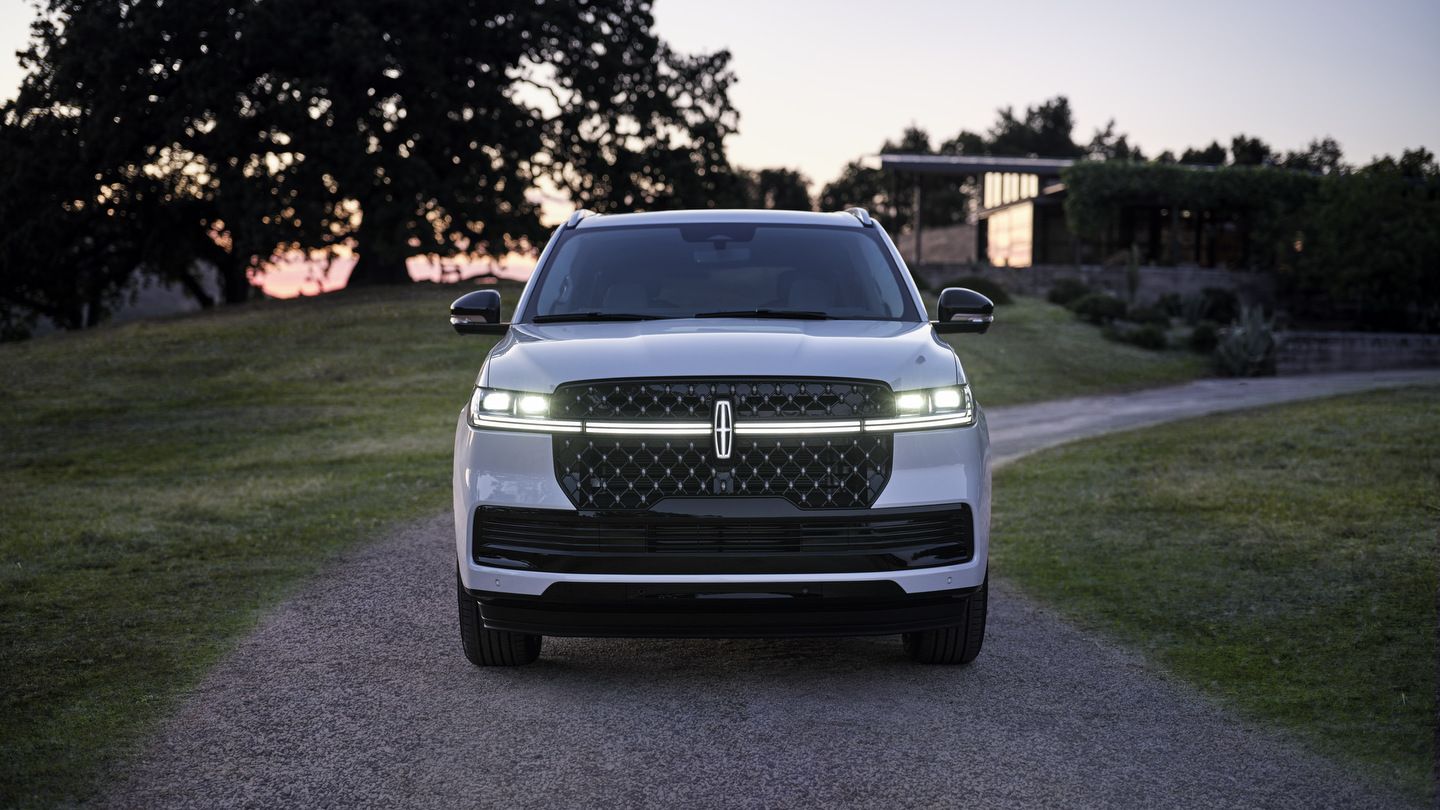
The most advanced adaptive systems use matrix or pixel LED arrays, where each headlight contains over 1,000 controllable points. A forward-facing camera continuously maps the scene ahead, identifying the position of other vehicles, pedestrians, cyclists, and road signs. The system then selectively dims or deactivates only the LED segments that would otherwise create glare, while leaving the rest of the beam at full intensity.
Imagine driving on a dark highway with an oncoming car in the distance. A traditional system would force you to switch to low beams, cutting your visibility in half. A pixel LED system, by contrast, dims only the narrow strip of light aimed at the other driver's windshield, maintaining high-beam illumination for the shoulders, ditches, and road ahead. The other driver sees a controlled beam that never blinds them, while you retain nearly full visibility.
This precision is equally useful in urban settings. When a pedestrian steps into a crosswalk, the system can highlight them by leaving that section of the beam at full brightness while dimming the surrounding area, effectively "spotlighting" the hazard.
Weather-Adaptive Modes: Cutting Through Fog and Rain
British Columbia's coastal climate brings frequent rain, fog, and mist - conditions that turn standard high beams into a liability. When light reflects off water droplets suspended in the air, it creates a glowing wall of glare that actually reduces visibility. Adaptive headlights counter this with dedicated fog and rain modes that lower the beam cutoff, widen the horizontal spread, and sometimes shift to a warmer colour temperature that penetrates moisture more effectively.
When the system detects rain (via windshield wiper activation or dedicated moisture sensors), it automatically adjusts the beam pattern to reduce reflections off wet pavement. In fog, the lights aim lower and spread wider, illuminating the road surface and shoulders without bouncing back into your eyes. For drivers navigating the frequent coastal mist around Victoria or the dense fog that settles over the Saanich Peninsula on winter mornings, these modes make a tangible difference in comfort and safety.
Integration with Driver Assistance Systems
Modern adaptive headlights don't operate in isolation - they're part of a broader suite of driver assistance technologies. In vehicles equipped with adaptive cruise control, lane-keeping assist, or semi-autonomous driving features, the headlight system shares data with these systems to anticipate road conditions. If GPS data indicates a sharp curve ahead, the lights may begin to swivel before you even start turning the wheel. If the collision warning system detects a pedestrian or animal near the road edge, the lights can subtly increase intensity in that zone to draw your attention.
This integration is particularly smooth in electric and hybrid models, where the vehicle's computer already manages power distribution, regenerative braking, and battery optimization. Adaptive LEDs draw less power than halogen or HID bulbs, which means they can operate continuously without meaningfully impacting electric range.
Reduced Eye Strain and Driver Fatigue
Beyond the measurable safety benefits, adaptive headlights address a less obvious but equally important issue: driver fatigue. Constantly adjusting to changing light levels, squinting into dark corners, and being dazzled by oncoming high beams all contribute to mental and physical exhaustion on long drives. By maintaining consistent, optimally adjusted illumination, adaptive systems reduce the cognitive load of night driving. Your eyes don't have to constantly refocus or adapt to sudden brightness changes, which means you arrive at your destination less tired and more alert.
For families making the drive from Victoria to Tofino, or commuters crossing the Malahat twice daily, this reduction in fatigue can be the difference between a stressful journey and a comfortable one.
What to Expect in 2026 Models
Industry-wide adoption of adaptive headlight technology is accelerating, driven by updated safety standards from Transport Canada and Euro NCAP's requirement for adaptive systems in vehicles seeking top safety ratings. By 2026, these features are no longer confined to luxury brands - they're appearing as standard or available equipment across a wide range of vehicles, from rugged trucks and family SUVs to efficient hybrids and all-electric models.
Matrix LED systems now feature over 1,000 controllable points per headlight, AI-driven predictive lighting that adjusts before you reach a hazard, and smooth integration with navigation and weather data. Response times have improved to a tenth of a second, and beam ranges now extend up to 600 metres in optimal conditions.
Learn More at Carson Automotive Group
Adaptive headlight technology has fundamentally changed how vehicles interact with the road at night. By dynamically adjusting to your speed, steering, surroundings, and weather conditions, these systems deliver visibility that's both safer and less fatiguing - exactly what British Columbia drivers need to navigate the province's diverse and often challenging roads after dark.
Visit our team at Carson Automotive Group in Victoria to explore the latest models equipped with adaptive lighting technology and see how they can transform your nighttime driving experience.