How Modern Vehicles See Through Coastal Rain: A Deep Dive Into Sensor Technology
February 11 2026,
You're heading home on the Trans-Canada through Hope at 6 PM in November. Heavy rain reduces visibility to less than 50 metres. Your wipers are maxed out, but you're still struggling to make out the taillights ahead.
Here's the reassuring truth: while your eyes are overwhelmed, your vehicle's sensor systems are working at full capacity. Modern vehicles use a sophisticated integration of radar, cameras, and thermal imaging to maintain awareness when human vision fails. This isn't future technology - it's available today on vehicles in showrooms across British Columbia, and it's specifically engineered for the conditions we face on the coast.
Radar: The All-Weather Workhorse
Millimetre-wave radar operates at 77 GHz, sending and receiving radio waves that pass through rain, fog, and darkness almost unaffected. Unlike light-based systems, radar performance remains consistent even in dense Pacific Northwest downpours, sea spray off the Strait of Georgia, or the curtain-like rain common on the Sea-to-Sky Highway.
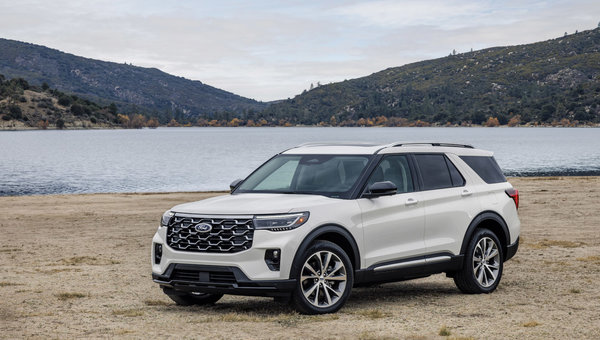
Radar forms the backbone of adaptive cruise control, automatic emergency braking, and blind-spot monitoring because it detects distance and speed of objects ahead, behind, and beside the vehicle regardless of visibility conditions. Ford Co-Pilot360 uses radar with forward, side, and rear coverage, maintaining awareness even when spray from a transport truck turns your windshield opaque.
The system processes this data with minimal latency, meaning adjustments happen faster than human reaction time. On Ford F-150 models, this radar network enables forward collision mitigation down to 0 km/h - full emergency braking even from highway speeds in conditions where a driver might not see the hazard until impact is unavoidable.
Thermal Imaging: Detecting Heat, Not Light
Thermal cameras detect infrared radiation - the heat emitted by objects above absolute zero. A pedestrian crossing the road, a cyclist without lights, or a deer stepping onto the shoulder shows up as a warm signature even when headlights reflect off standing water and blind a visible-light camera.
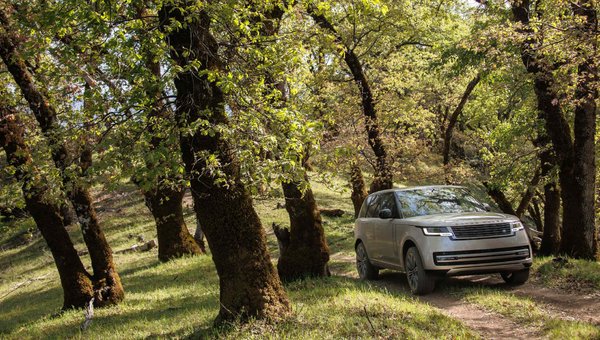
Land Rover integrates thermal imaging into driver assistance systems on the Defender 130 and Range Rover Autobiography. The system identifies heat signatures, displaying detected pedestrians and animals on the instrument cluster. This technology proves particularly valuable on unlit rural roads where wildlife encounters are common, and during the low-light conditions of coastal winter evenings when the sun sets before 5 PM.
Research by Teledyne FLIR shows that in light-to-moderate fog, long-wave infrared sensors can see up to four times farther than visible-light cameras. While both technologies eventually reach the same fundamental atmospheric limit in very dense fog, thermal imaging extends the detection envelope considerably in the marginal conditions that define most coastal BC weather.
The Range Rover Autobiography pairs this thermal capability with Matrix LED headlamps. The system automatically compensates for mud or rain on the lens surface, maintaining optimal illumination even after hours of driving through spray and road grime.
Camera Fusion: Reading the Details
Visible-light cameras remain essential for tasks radar and thermal struggle with: reading lane markings obscured by standing water, identifying traffic signs through mist, and recognizing traffic lights. Modern systems integrate all three sensor types rather than relying on one alone.
Lincoln Co-Pilot360 on the Aviator uses integrated camera-and-radar scanning to watch for pedestrians and vehicles ahead, providing pre-collision warnings and automatic braking. Rain-sensing wipers keep the camera lens clear as part of the same integrated approach.
Jaguar's ClearSight system on the F-Pace integrates multiple cameras with ultrasonic sensors, specifically calibrated to handle the extreme contrast between glare from wet pavement and dark shadows. The 360-degree coverage includes ClearSight Ground View, which stitches together feeds from corner-mounted cameras to create a transparent view beneath the vehicle - useful when navigating tight parking spaces in underground garages where lighting is poor and concrete pillars create blind spots.
Mazda takes a different approach with the i-Activsense suite on the CX-90 PHEV. The system integrates camera and radar technology for lateral accuracy even in heavy rainfall. The 360-degree View Monitor uses fisheye lenses with low-light sensitivity, maintaining functionality during the dark, rainy mornings common from October through March.
How Sensor Fusion Works
Each sensor type has a weakness. Cameras struggle with glare and spray. Radar sees distance but can confuse a pedestrian with a guardrail. Thermal imaging has limited range in very dense precipitation. The breakthrough comes from integrating them.
The central processing unit weighs input from all sensors simultaneously. Each sensor essentially "votes" on what it detects, and the system makes decisions based on the best available data at each fraction of a second.
On a dark, rainy night descending from Whistler, the radar locks onto a stopped vehicle ahead through the spray. The camera confirms it's a car and reads the lane markings. The thermal sensor flags a pedestrian walking on the shoulder. All three feeds converge into one safety response: the system applies partial braking, tightens your seatbelt, and displays a warning on the head-up display - all before your eyes have fully processed the scene.
Mitsubishi's Forward Collision Mitigation system on the Outlander PHEV uses radar-based detection for forward and cross-traffic monitoring. When the system detects reduced visibility, it applies lane departure prevention with adaptive steering assistance - enough to guide you back into your lane if you drift while focused on seeing through the weather.
British Columbia Specific Considerations
These systems must satisfy Canadian Motor Vehicle Safety Standards for adaptive lighting and crash avoidance. In British Columbia, ICBC requires sensor calibration documentation for insurance claims involving low-visibility crashes where visibility was less than 100 metres. Jaguar Land Rover Canada specifically warranties sensors against coastal salt-rain corrosion for five years with unlimited kilometres, acknowledging the harsh conditions these systems face in our climate.
The provincial winter tire mandate from October 1 to April 30 integrates with sensor suites on several vehicles. The Land Rover Defender's Terrain Response system includes a dedicated rain mode that adjusts traction control based on visibility sensor data. The system maintains full capability while towing and includes wade sensing to 900 millimetres depth - relevant for the seasonal flooding common in the Fraser Valley.
What This Means for Drivers
This technology stack isn't theoretical. Radar-based automatic emergency braking, camera-plus-radar fusion, and thermal night vision are available today across multiple brands and price points. The Mitsubishi Outlander PHEV includes Forward Collision Mitigation as standard equipment. The Mazda CX-90 PHEV includes the complete i-Activsense suite. Ford Co-Pilot360 provides comprehensive forward and cross-traffic detection.
Pricing shown reflects the price at the time of writing. Final pricing may vary.
The systems work because they don't replicate human vision - they exceed it. Radar sees through conditions that blind cameras. Thermal imaging detects heat signatures invisible to the human eye. Cameras process contrast ranges far beyond human capability. The fusion of these technologies creates situational awareness that remains consistent regardless of weather, lighting, or driver fatigue.
Learn More at Carson Automotive Group
The next time you're considering a new vehicle, ask about the specific sensing technologies available. In coastal British Columbia, where rain and fog are facts of life rather than occasional inconveniences, these systems mark a fundamental shift in vehicle safety. Our team at Carson Automotive Group can walk you through the capabilities of each system and help you understand which configuration best matches your driving patterns and routes.